
She Was Teaching 3 Shifts a Day in Brazil. Now She Teaches English in Vietnam, 25 Hours a Week.
A history graduate from Brazil who traded cruise ships for a classroom in Ho Chi Minh City, and somehow ended up happier than she'd been in years.
Camila used to work morning, afternoon, and evening shifts just to pay rent in Brazil. Now she teaches 25 hours a week in Vietnam, rides a motorbike through Saigon traffic, and makes more money than she needs. This is how that happened.

Watch Camila's full interview — recorded in Ho Chi Minh City
Camila graduated with a history degree and figured she'd teach. That's what you do with a history degree in Brazil. But the reality of teaching there hit pretty fast: you work a morning shift at one school, an afternoon shift at another, maybe an evening shift somewhere else, and at the end of the month you've barely covered rent and food. There's nothing left over. No savings, no breathing room, no future you're building toward.
"Morning, afternoon, and evening just to survive," is how she described it later. Three shifts a day and still treading water. So she did what a lot of Brazilians do when they realize the local math will never work in their favor: she went to sea.
Five Years at Sea
Cruise ships are good for a while. You see the world, the money is decent, and your expenses are basically zero because you live on the ship. She saved more in a year at sea than she would've in three years back home.
But after five years of living out of a cabin, she started wanting something different. Not just "where am I going next month" but "where do I actually want to be in five years?" The ships couldn't answer that. So she got off, came back to Brazil at 32 with some savings, and started looking for what was next.
How She Found UP2U
She was scrolling Instagram one day and came across UP2U. The page was showing non-native English speakers who'd gotten teaching jobs in Vietnam: people from Brazil, Morocco, Tunisia, Colombia. Not Americans or British people, but people who grew up speaking Portuguese or Arabic or Spanish and still got hired.
She'd never considered Vietnam before. But this wasn't some vague "teach English abroad" pitch. There were actual steps, actual people who'd gone through the process, actual salary numbers. She reached out to learn more.
What stood out to her was that nobody oversold it. They told her exactly what the process looked like, how long it would take, what the salary range was, what she'd need to prepare. After five years of cruise ship companies making everything sound better than it was, someone being straightforward felt unusual. She signed up.
26 Days From Demo Videos to Job Offer
The UP2U process works in stages: you build a profile, record demo teaching videos, and those videos get sent to schools in Vietnam. Schools watch them and make offers.
Camila had her demo videos finished by May 29th. On June 24th, she had a signed job offer in Ho Chi Minh City. Twenty-six days from videos to contract.
First Day in Ho Chi Minh City: "Chaos"
Her first impression of Ho Chi Minh City was "chaos." Motorbikes everywhere, no clear traffic rules, noise from every direction, and a kind of heat that just sits on you and doesn't let up. After five years on cruise ships where everything was controlled and predictable, the city felt like the opposite of anything she'd known.
But she got used to it fast. Found her neighborhood, her regular coffee spot, her shortcuts through the side streets. She rides a motorbike now, which if you've ever seen Saigon traffic, tells you everything about how comfortable she's gotten.
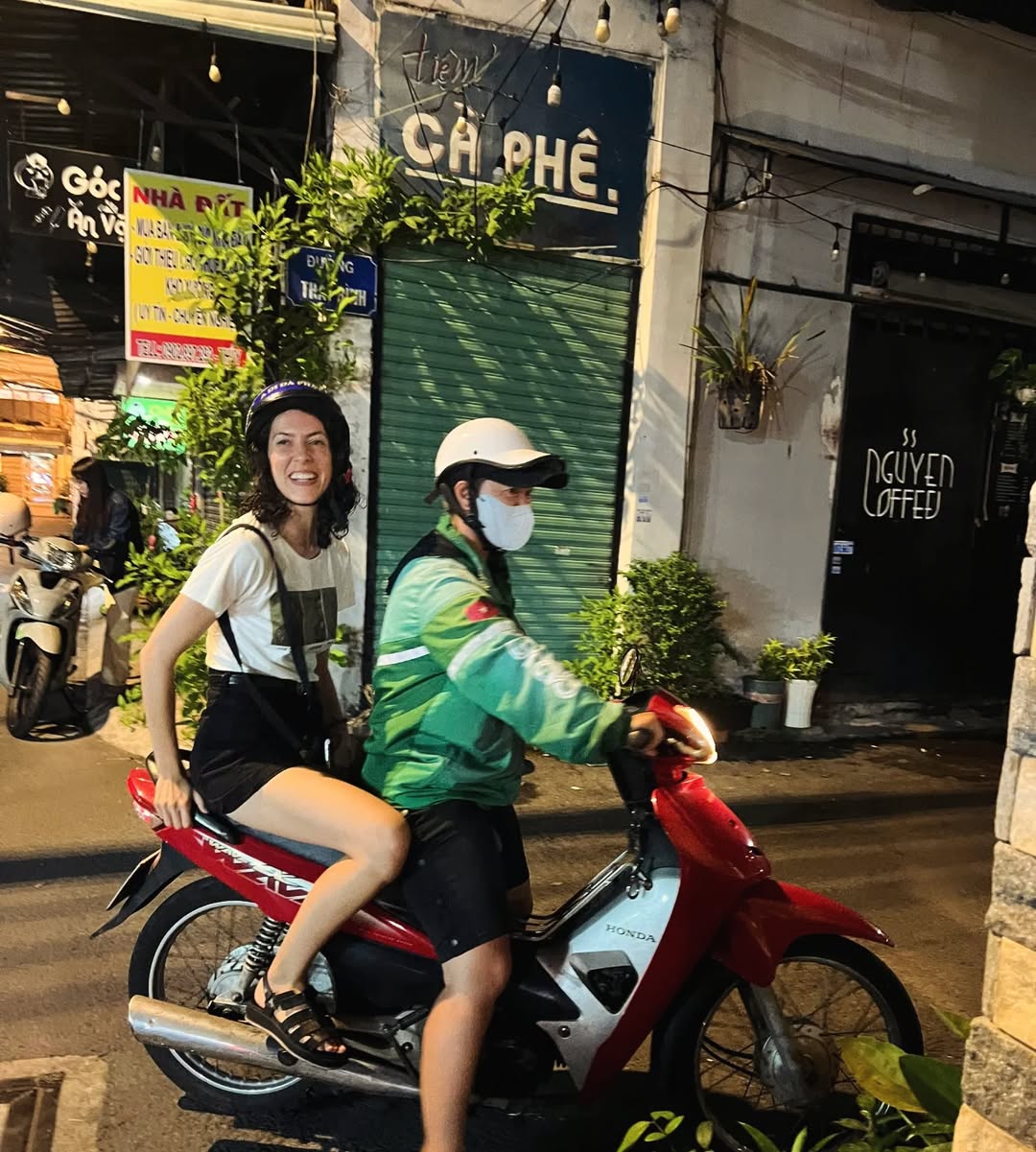
Camila on a motorbike in Saigon. If you can handle HCMC traffic, you can handle anything.
What the Numbers Actually Look Like
She teaches 25 hours a week. Compare that to Brazil, where she would've needed three shifts at three schools just to cover rent. In Vietnam, she works half the hours and in her own words, she's "making more money than she needs."
The reason is simple: rent in Ho Chi Minh City is low, food is cheap and good, you don't need a car, and teaching salaries are designed for an economy where $1,500/month puts you well above the cost of living. You end up with actual money left over at the end of the month, which for a Brazilian teacher is a completely new experience.
When she says that, she doesn't mean she's rich. She means she can go on a weekend trip without spending two months saving up for it. She can get sick and go to a doctor without worrying about how to pay for it. She has a cushion. That might sound small, but if you've spent years where every unexpected expense was a crisis, having that cushion changes how you wake up in the morning.
The Thing Nobody Talks About: Safety
Anyone who's lived in Brazil knows what it's like to constantly think about safety. Which street to avoid after dark, which bus not to take, don't pull out your phone on the sidewalk, don't wear that necklace, text someone when you arrive. It's this constant background noise that you've been living with your whole life, so you barely notice it anymore.
In Vietnam, that noise goes away completely.
You can leave your laptop at a coffee shop table while you go to the bathroom and nobody touches it. You walk home at 2 AM through streets you've never been on. Your phone sits in your back pocket on a motorbike and stays there. Vietnam has one of the lowest violent crime rates in Southeast Asia. Petty theft happens, it's a big city, but the kind of daily fear that shapes how you move through São Paulo or Rio or Recife doesn't exist here.
For Brazilians, this might actually be the most underrated part of moving to Vietnam. Not the salary, not the schedule, but the fact that you stop calculating danger every time you walk out of your apartment. You don't realize how heavy that weight was until you're living without it.

The view from above. Ho Chi Minh City from the Landmark 81 observation deck.
"But My Family Is on the Other Side of the Planet"
Vietnam is about as far from Brazil as you can get. The time zone difference is 10 or 11 hours. There's no direct flight; you're looking at 24+ hours with layovers. If you're close with your family, that distance is hard, especially in the first few weeks.
But what actually happens is you FaceTime your mom during your morning coffee (which is her evening). You send photos of your street food dinner, she sends photos of Sunday lunch. WhatsApp closes the gap more than you'd think. And because you're actually saving money instead of spending everything just to survive, you can afford to fly home once a year, which is more than most Brazilian teachers can manage on local salaries.
The distance doesn't go away. But being far and happy beats being close and struggling.
Food, Language, and the Stuff That Scares You Before You Go
Vietnamese food is not arroz e feijão, but it's built on rice, grilled meat, fresh herbs, and noodle soups. A full street food meal costs less than a bus ticket in São Paulo. Give it a week and you'll have three favorite spots. Give it a month and you'll have strong opinions about which phở place on your block is better.
The language is harder. Vietnamese is tonal and nothing like Portuguese or English. But your job is conducted in English, your colleagues speak English, your landlord uses Google Translate, and ride-hailing apps handle the rest. You pick up enough Vietnamese to order food in the first couple weeks, and beyond that, English covers everything you need.
As for your accent: schools don't care. They care whether you can teach, whether kids respond to you, whether you show up prepared. A Brazilian accent in a Vietnamese classroom is just an accent. Like everybody else's.
Sending Money Home: How the Math Works in Reais
Brazilians always ask about this and nobody gives a clear answer, so here are the actual numbers.
You earn in Vietnamese dong, spend in dong, and transfer surplus home through Wise or Remessa Online. Both give you the real exchange rate with a small fee, not the bank rate that eats 5-8% of your transfer.
Say you're earning $1,500/month and spending $600-700 on rent, food, transport, and going out (comfortable, not frugal). That leaves $800-900 to save or send home. At current exchange rates, that's roughly R$4,500-5,000 per month landing in your Brazilian bank account.
For context: the average teacher salary in Brazil is around R$3,000-4,000. So you'd be sending home more than a full Brazilian teacher salary as your leftover, after already paying for your entire life in Vietnam.
The Thing Nobody Tells You About Support
Moving to a country where you don't know anyone is hard. No friends, no family, no social network. The first weeks can feel lonely, and there's no way around that.
But when we talked to Camila, she kept coming back to one thing: she didn't feel like she was on her own after she landed.
That matters more than most people think when they're deciding whether to do something like this. Getting placed is one thing. But what happens after you land? What if you have a problem with your school, or a visa question, or you're just having a rough week? Knowing there's someone on the other end who understands your situation and will actually help makes the whole move feel a lot less scary.
What Brazil Taught Her (That She Uses Every Day in Vietnam)
Having a history degree in a country where history degrees don't pay teaches you a few things: how to communicate across barriers, how to make people care about things they assume won't apply to them, how to figure things out when nobody hands you a playbook. Those turn out to be useful skills in a classroom.
And five years on cruise ships, adapting to new environments constantly, working with people from every background, managing different expectations and moods? Also useful.
Camila's background didn't disqualify her from teaching. It actually prepared her for it in ways she didn't see until she was standing in front of a class in Ho Chi Minh City. The non-traditional career path, the degree from a non-English country, the years doing work that didn't quite fit: all of that became context that made her a better teacher, not a worse one.
Year Two: From Teacher to Hiring Manager
This part wasn't in the original interview because it hadn't happened yet.
Camila stayed for a second year. Her school didn't just renew her contract; they promoted her. She's now a hiring manager, sitting on the other side of the table, reviewing demo videos from new applicants and deciding which teachers move forward.
A Brazilian woman with a history degree who showed up in Ho Chi Minh City knowing nobody, calling the traffic "chaos," figuring everything out week by week. And now her school trusts her to build their teaching team. She took the work seriously, showed up consistently, and earned it.
That's what she said, half joking, when Fernanda arrived from Brazil in September. Another Brazilian who'd gone through the UP2U process, landed in Ho Chi Minh City, and started teaching. Camila was already settled in and could help her get oriented during those first confusing weeks.
We joked internally that Camila had placed an order for more Brazilians and we'd delivered. But the real point is that there's a small and growing community of Brazilian teachers in Vietnam who all came through the same door, and every new person who arrives makes the next one's adjustment a little easier.
Weekends in Vietnam

Phú Quốc island

Dalat highlands
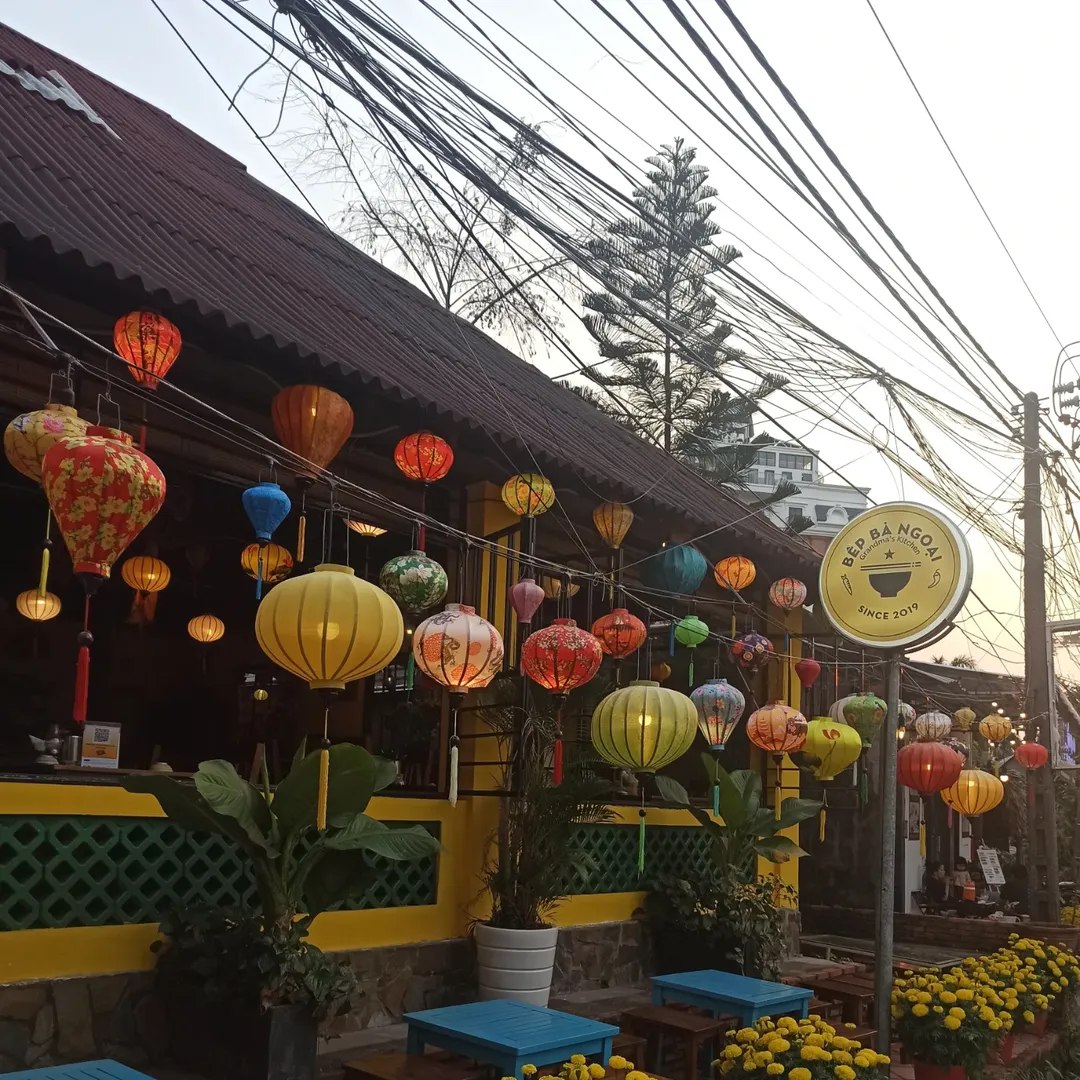
Hội An lanterns
What This Actually Means If You're in Brazil Right Now
If you're reading this from Brazil and you know what it's like to work three shifts a day just to stay afloat, you already understand why this matters.
The question isn't whether it's possible. Camila did it. Fernanda did it. The question is whether you're willing to go through the steps: record demo videos, let UP2U send them to schools, pick from the offers that come back.
It took Camila 26 days from finishing her videos to getting a job offer. She's still in Vietnam two years later, except now she's the one deciding which new teachers get hired.
The city will feel like chaos at first. You'll get used to it. You'll eventually ride a motorbike through it. And "making more money than I need" will become a normal thing to say at the end of a 25-hour teaching week.
You're Next
Same System. Same Support. Your Story Next.
700+ teachers placed from 32+ countries. Brazil, Morocco, Tunisia, Colombia, Serbia: non-native speakers who decided to stop waiting and start building.
See How the System Works →Not Native Still Hired System · From $297