
TEFL Certificate for Vietnam — Which One Do You Actually Need? (2026 Guide)
You need a TEFL to teach in Vietnam. But which one? How many hours? Online or in-person? And how do you avoid blowing $2,000 on something you don't need? Let's cut through the confusion once and for all.
If you've spent more than ten minutes researching how to teach English in Vietnam, you've already noticed the problem: everyone has a different answer about which TEFL certificate you need.
Some people say you need CELTA. Others say a cheap online course is fine. Some say 120 hours, others say 150 hours, and a few say you don't even need a TEFL at all if you have a degree.
Most of this information is outdated, wrong, or being pushed by companies trying to sell you their own overpriced course. So let's break down what Vietnam actually requires in 2026, which providers are accepted, and how to make the smartest decision for your budget and your career.
Whether you're a non-native speaker planning your move or a native speaker looking for the most cost-effective route, this guide covers everything.
What Vietnam Actually Requires
Let's start with the facts. Here's what Vietnamese immigration and schools actually look for when it comes to your TEFL certificate:
120-hour TEFL or TESOL minimum. This is the baseline. Anything under 120 hours won't be accepted by most schools and won't be valid for your work permit application. Some schools prefer 150+ hours, but 120 is the legal standard.
Must be from an accredited or recognized provider. It doesn't need to be from Cambridge or a university. It just needs to be from a legitimate, accredited organization that the Vietnamese government recognizes. No-name websites selling $29 certificates don't count.
Online certificates ARE accepted by most schools. This is one of the biggest misconceptions. You do not need an in-person TEFL. The vast majority of language centers, public schools, and international schools in Vietnam accept online TEFL certificates, as long as they meet the 120-hour requirement and come from an accredited provider.
CELTA and Trinity CertTESOL are prestigious but NOT required. These are the "gold standard" certifications in the TEFL world, and they look great on a resume. But they are absolutely not necessary for getting hired in Vietnam. They're expensive, time-consuming, and frankly overkill for 95% of teaching positions here.
The certificate must be apostilled for your work permit. This is the step most people forget. Your TEFL certificate needs to be authenticated (apostilled) by your home country's government before Vietnam will accept it for your work permit. More on this below.
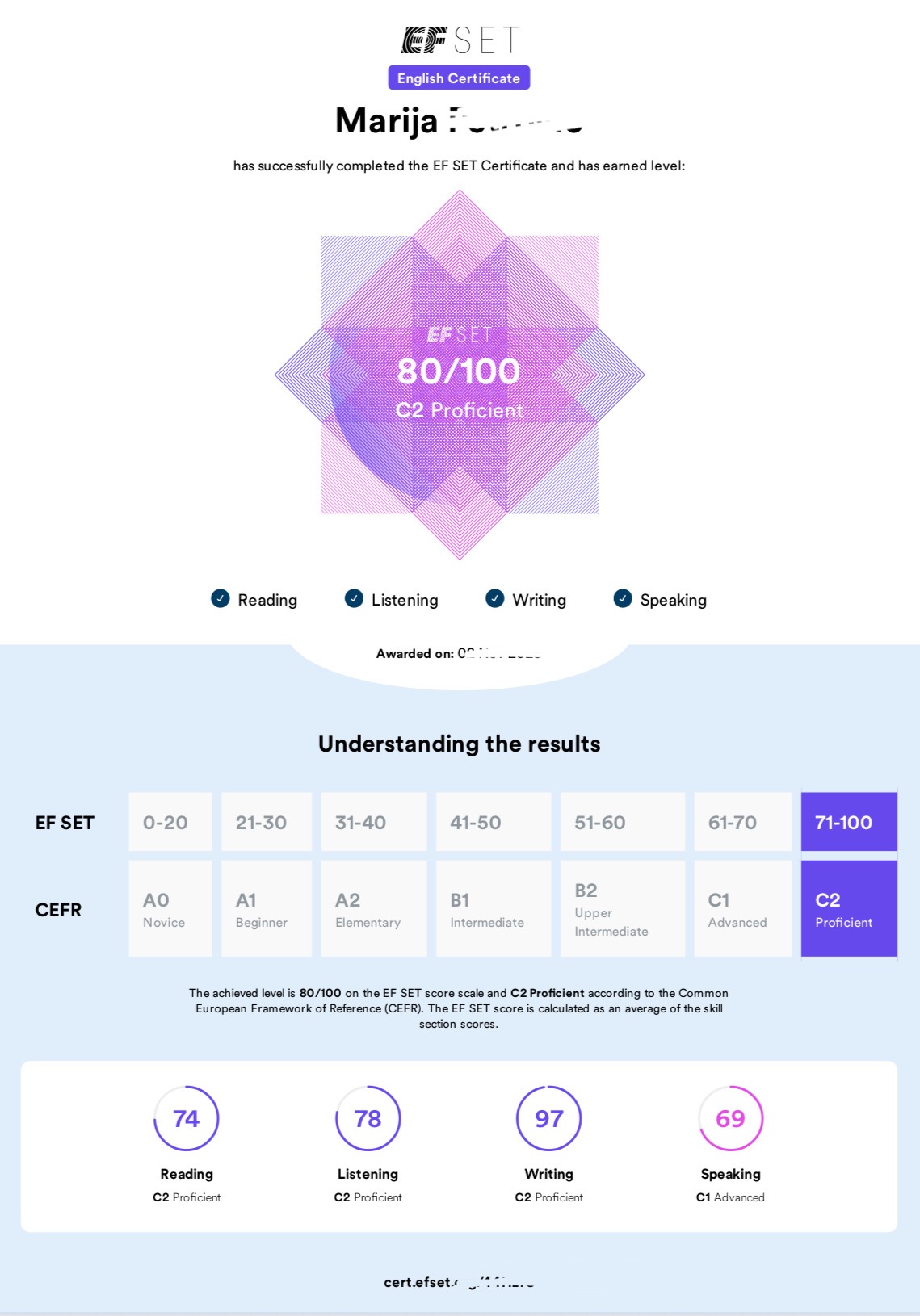
An EF SET C2 English proficiency certificate — the kind of document that removes any doubt about your language level before schools even meet you.
TEFL vs TESOL vs CELTA — What's the Difference?
These three acronyms cause more confusion than almost anything else in the teaching-abroad world. Here's the truth, simplified:
TEFL
Teaching English as a Foreign Language. The most common and widely recognized certification for teaching English abroad. Available online and in-person from hundreds of accredited providers. Affordable, flexible, and accepted everywhere in Vietnam.
Best for Vietnam
TESOL
Teaching English to Speakers of Other Languages. Essentially the same thing as TEFL with a slightly different name. The terms are interchangeable. Schools in Vietnam don't distinguish between the two. If you have a TESOL, you're good.
Interchangeable with TEFL
CELTA
Certificate in English Language Teaching to Adults. A Cambridge University qualification. Prestigious and respected worldwide. But it costs $1,500 to $2,500, takes 4 weeks of intensive in-person study, and is complete overkill for getting hired in Vietnam.
Overkill for Vietnam
The bottom line? A standard 120-hour TEFL from any reputable provider is all you need. Don't let anyone convince you that you need to spend $2,000+ on CELTA just to teach kids in Ho Chi Minh City. It's like buying a Ferrari to drive to the grocery store — impressive, but completely unnecessary.
Online vs In-Person
This is probably the question we get asked most often. And the answer might surprise you.
Online TEFL
- Cost: $150 - $500
- Duration: 4 - 12 weeks (self-paced)
- Format: Study from home, on your schedule
- Accepted? Yes — by 90%+ of schools in Vietnam
- Best for: Budget-conscious teachers, people who are already working or studying, anyone who wants flexibility
In-Person TEFL
- Cost: $800 - $2,500
- Duration: 4 weeks intensive
- Format: Classroom setting, full-time commitment
- Accepted? Yes — and looks slightly better on a resume
- Best for: People who want hands-on classroom practice before their first teaching job
The only scenario where in-person makes sense is if you have zero confidence in your teaching ability and want the practice before you step into a real classroom. But even then, most schools in Vietnam provide training when you arrive, so you'll learn on the job regardless.
If you're trying to keep your costs low (and you should be — check out our cost of living breakdown for teachers in Vietnam), go online. Period.
Recommended TEFL Providers
Not all TEFL providers are created equal. Here are five that are well-known, accredited, and accepted by schools in Vietnam:
International TEFL Academy
Highly regarded in the industry with lifetime job placement support. Their course is comprehensive and includes a personal advisor who helps you find jobs after certification. One of the most trusted names in the TEFL world.
i-to-i TEFL
UK-based provider that's been around for over 20 years. Well-known globally, affordable pricing, and their certificates are widely recognized across Asia including Vietnam. Good balance of quality and price.
TEFL.org
One of the most affordable options that's still fully accredited. Great for budget-conscious teachers who want a legitimate certificate without breaking the bank. Straightforward course with good reviews.
Bridge TEFL
US-based provider with a strong reputation, especially in North and South America. Their courses are accredited and their certificates are accepted by schools throughout Vietnam. Good customer support and clean platform.
The TEFL Academy
Popular in the UK and Europe, with government-regulated qualifications. Their Level 5 TEFL is one of the highest-rated online courses available. Solid choice if you want a well-structured learning experience.
Any of these will work for Vietnam. The "best" one depends on your budget and personal preference. If money is tight, TEFL.org or i-to-i at the lower end will serve you perfectly well. If you want the most hand-holding and job support, International TEFL Academy is worth the investment.
How to Apostille Your TEFL Certificate
This is the step that trips up almost everyone. You can have the perfect TEFL certificate, the perfect degree, and the perfect resume — but if your documents aren't apostilled, you're not getting a work permit in Vietnam.
So what does "apostille" even mean?
An apostille is a government-issued authentication stamp that verifies a document is legitimate for international use. It's part of the Hague Convention, and Vietnam requires it for your degree, TEFL certificate, and criminal background check before they'll issue you a work permit.
The process varies by country. In the United States, you get your apostille from the Secretary of State's office in the state where the document was issued. In the United Kingdom, it's done through the Foreign, Commonwealth & Development Office. In most other countries, the Ministry of Foreign Affairs handles it.
Some TEFL providers actually help with the apostille process or partner with services that handle it for you. It's worth asking when you enroll.
And here's something that makes life easier: the UP2U system includes step-by-step apostille guidance for every country. Instead of spending hours on Google trying to figure out which office to call and which forms to fill out, you get a clear walkthrough tailored to your specific nationality.

Inside a real Vietnamese language center — where your TEFL certificate takes you.
Common Mistakes to Avoid
We've seen hundreds of aspiring teachers make the same mistakes over and over. Here are the four biggest ones:
Don't buy a $29 "TEFL certificate" from a random website.
Those ultra-cheap certificates from no-name websites are not accredited, not recognized, and will be rejected by every legitimate school in Vietnam. If it sounds too good to be true, it is. You'll end up having to buy a real one anyway, so you're actually spending more money.
Don't get a certificate under 120 hours.
Vietnam's work permit process requires a minimum of 120 hours. Anything less — 40-hour courses, 60-hour courses, 80-hour "fast track" courses — won't meet the requirement. Don't waste your time or money on anything under 120 hours.
Don't pay $2,500 for CELTA when a $200 TEFL works fine.
CELTA is a fantastic qualification if you want to teach at British Council or build a long-term career in TEFL management. But for getting hired at a language center in Vietnam? A standard TEFL does the exact same job at a fraction of the cost. Be smart with your money.
Don't forget to apostille it before traveling.
We cannot stress this enough. Arriving in Vietnam with an un-apostilled TEFL certificate means delays, stress, and potentially having to mail documents back to your home country while you're already abroad. Get it done before you leave. Your future self will thank you.
Do I Need a TEFL If I Have a Degree?
Short answer: yes, you almost certainly still need one.
This is one of the most common questions we get, and the confusion comes from the fact that some schools technically only require a bachelor's degree. But here's the reality on the ground in 2026:
Having a degree does NOT exempt you from needing a TEFL in Vietnam. The Vietnamese government's work permit requirements list both a degree and a TEFL/TESOL certificate. While some smaller language centers might hire you with just a degree, it severely limits your options and your earning potential.
Most schools require BOTH a degree and a TEFL. This is especially true for higher-paying positions at international schools, reputable language centers, and public school programs. If you want access to the best jobs, you need both documents.
Some language centers accept degree-only candidates, but it limits your options. You'll be restricted to lower-paying positions, smaller schools, and less desirable locations. It also makes your work permit process more complicated.
The best combination: degree + TEFL = maximum job opportunities. This is the golden ticket. With both documents in hand (and both apostilled), you qualify for the widest range of positions and the highest salaries. It's a $200 investment that opens doors worth thousands in extra income. If you've already done three or four years of university, spending a few weeks on a TEFL course is nothing.
Look at it this way: Chaymae and Soufiane from Morocco both got their TEFL certifications before moving to Vietnam, even though they already had degrees. That combination is what allowed them to land well-paying jobs and start earning $2,500+ per month as a couple. The TEFL wasn't optional — it was part of the strategy.
Not Sure If You Qualify?
Your TEFL certificate is just one piece of the puzzle. Take the UP2U quiz to find out where you stand — and exactly what steps you need to take next.
Take the Quiz
Answer a few quick questions about your background, qualifications, and goals. We'll tell you exactly whether you qualify to teach in Vietnam and what you need to do next — including which TEFL certificate makes sense for you.
Free. Takes 2 minutes.
Get the Full System
The Not Native, Still Hired system walks you through every step — from getting your TEFL to apostilling your documents, building your application, filming your teaching demo, landing interviews, and getting hired.
Over 700 teachers have used this system to get placed in Vietnam. It works for non-native speakers, career changers, and people with zero teaching experience.
Don't overthink the TEFL. Just get one, get it apostilled, and get started.
P.S. Already have your TEFL sorted? Skip the quiz and go straight to the Not Native, Still Hired system to start your application.