
Vietnam vs Thailand vs China — Where Should Non-Native Teachers Go in 2026?
Three countries. Three very different realities. Only one that actually wants you.
We break down salaries, visas, cost of living, and quality of life across the three most popular Asian countries for teaching English abroad — so you can stop guessing and start planning.
If you're a non-native English speaker thinking about teaching abroad in Asia, three countries probably keep showing up in your research: Vietnam, Thailand, and China.
They're the three most popular destinations for ESL teachers worldwide. Thousands of people move to each one every year chasing the dream of teaching English overseas — good salary, low cost of living, exotic food, warm weather, adventure.
But here's the thing nobody tells you until it's too late: these three countries are wildly different when it comes to how they treat non-native English speakers. And if you pick the wrong one, you could waste months of preparation, thousands of dollars in flights and visa fees, and end up stuck in a country that doesn't even legally allow you to work.
So let's break it down. Country by country. No fluff, no sugarcoating — just the reality of what each destination looks like for someone who wasn't born in an English-speaking country.
The Non-Native Reality Check
Before we compare salaries and beaches, we need to address the elephant in the room: not all three countries will actually hire you.
This is the single most important factor for non-native speakers, and it's the one that most "teach abroad" blogs conveniently leave out because they're written by Americans and Brits who never had to deal with passport discrimination.
China: Officially requires native speakers from one of seven countries — the United States, United Kingdom, Canada, Australia, New Zealand, Ireland, and South Africa. Since the Z visa crackdowns that started in 2019, enforcement has gotten significantly stricter. Some private language centers still hire non-natives under the table, but it's illegal, it's risky, and if you get caught, you face deportation, fines, and a ban from re-entering the country. Your employer faces penalties too, which means they can pull the plug on your job at any moment if inspections come around. It's not a stable or safe way to build a life abroad.
Thailand: There's no strict native-speaker-only rule on paper, which makes it seem more accessible. But the reality is messier. Work permits are notoriously complex and expensive, and most schools — especially the cheaper ones that hire non-natives — won't help you with the paperwork. The result? A huge number of teachers in Thailand work illegally on tourist visas, doing border runs every 60 to 90 days, always one immigration check away from getting banned. It's technically possible to teach legally as a non-native in Thailand, but the pay is so low ($800 to $1,200 a month at most schools) that it barely covers your expenses, let alone justifies the hassle. Many teachers end up trapped — not making enough to save, not making enough to leave.
Vietnam: Actively and openly hires non-native English speakers at legitimate, licensed language centers and international schools. Work permits are available for teachers of all nationalities as long as you meet the basic requirements — typically a bachelor's degree, a TEFL certificate, and a clean background check. The market is growing fast, with hundreds of language centers across cities like Ho Chi Minh City, Hanoi, Da Nang, and smaller cities like Ha Long Bay, Nha Trang, and Vung Tau. Employers sponsor your work permit, and the process, while bureaucratic, is straightforward and legal. You're not hiding. You're not running. You're building something real.
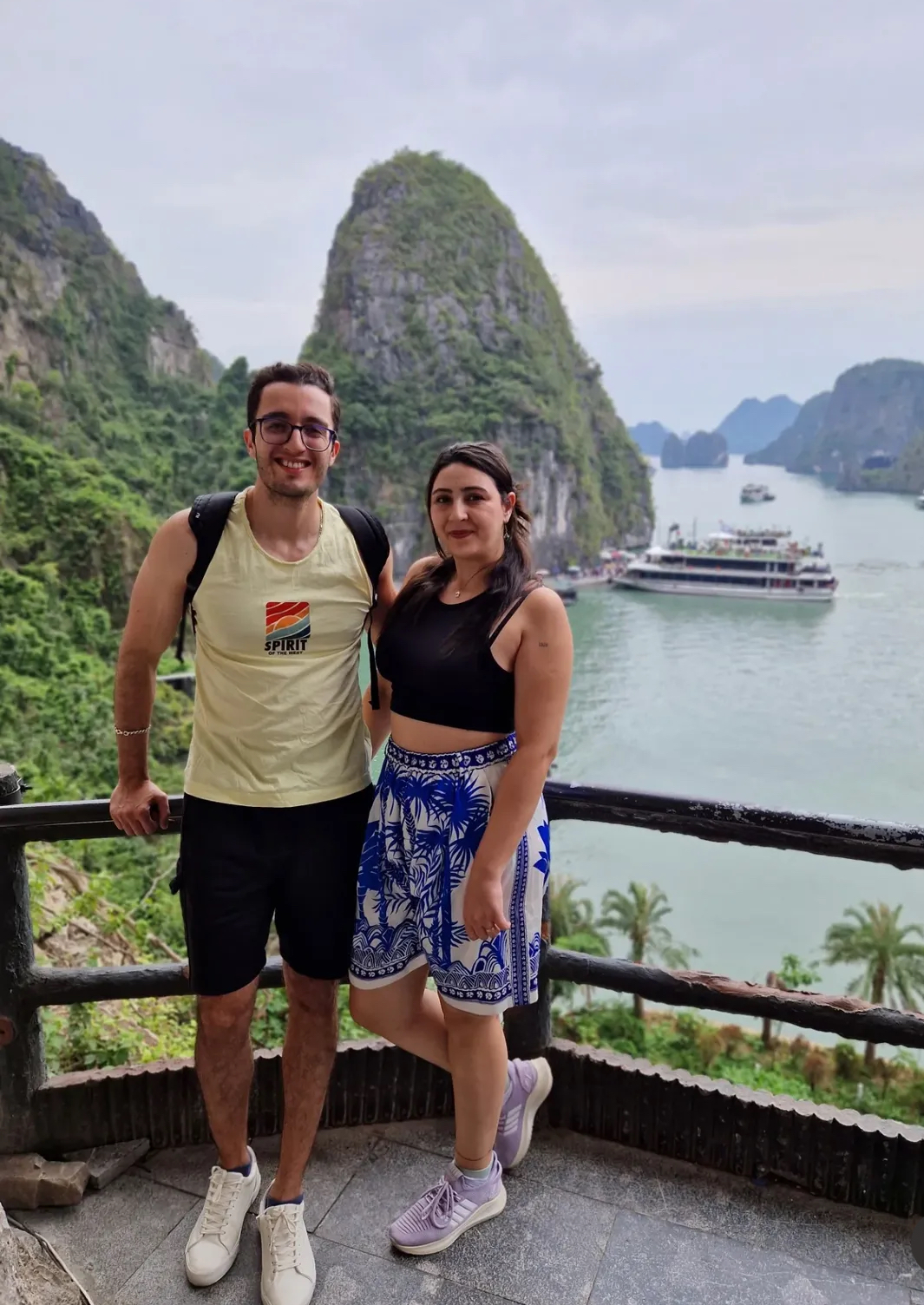

Life in Vietnam on a teacher's salary — Ha Long Bay cruises, tropical drinks, zero stress.
If you want to read the full breakdown of how non-natives get hired in Vietnam specifically, we wrote an entire guide on it: .
Salary Comparison
Let's talk money. This is usually the first thing people look at, and it makes sense — you want to know if you can actually live on what these countries pay. But the raw salary number only tells part of the story. What matters more is what you keep after expenses, and whether you can even access that salary in the first place.
Monthly Salary Ranges
*Mostly for native speakers only
China pays more but won't hire you if you're non-native. Thailand hires you but can't pay you. Vietnam does both.
The numbers above are based on full-time teaching positions at language centers, which is where most non-native teachers end up working. International schools and universities can pay more, but they typically require more qualifications and experience — sometimes a master's degree or multiple years of in-classroom teaching.
In Vietnam, a typical non-native teacher working 20 to 25 hours per week at a language center earns between $1,200 and $1,800 per month. Teachers who pick up extra classes, work at multiple centers, or teach private students on the side can push that to $2,100 or more. If you want to see real numbers from teachers already in Vietnam, check out our — it lets you estimate your actual take-home pay based on your qualifications and city.
In Thailand, that $800 to $1,500 range sounds manageable until you factor in Bangkok's rising costs. Teachers outside Bangkok — in Chiang Mai, for example — can survive on less, but they're also earning on the lower end of that range. And again, many of these positions don't come with work permit sponsorship, which means you're working illegally and could be sent home at any time.
China's $1,500 to $3,000 range is the highest of the three, and for native speakers with degrees, it's genuinely a good deal. But if you're reading this article, chances are you're not a native speaker — which means that salary range is essentially off-limits. The few non-native teachers who do work in China tend to be at unlicensed schools, paid in cash, with zero legal protections.
Cost of Living
Salary is only half the equation. What really matters is how much you keep at the end of the month — your savings rate. And this is where Vietnam absolutely dominates the comparison for non-native teachers.
Monthly Cost of Living
Realistic Monthly Savings
*If you can get hired as a non-native (which is extremely unlikely)
Vietnam is the cheapest of the three countries to live in. A comfortable one-bedroom apartment in Ho Chi Minh City or Hanoi runs $250 to $400 per month. In smaller cities like Da Nang or Ha Long Bay, you can find nice places for $150 to $250. Groceries, street food, and local restaurants are absurdly cheap — a full meal at a local spot costs $1 to $2, and even a nice dinner at a mid-range restaurant rarely exceeds $10 per person.
We built an entire interactive breakdown of what life actually costs in Vietnam for teachers. You can explore it here: .
Thailand used to be the cheapest country in Southeast Asia, but Bangkok has gotten significantly more expensive over the past five years. If you're willing to live in Chiang Mai or smaller cities, you can keep costs around $700 a month, but Bangkok will eat through your paycheck fast — especially on a $900 to $1,200 teaching salary. Most non-native teachers in Thailand report saving little to nothing.
China's cost of living varies wildly by city. Tier 1 cities like Shanghai and Beijing are expensive — $800 to $1,000 or more per month — while smaller cities can be dirt cheap. But again, this is largely irrelevant for non-natives because you probably can't get a legal job there anyway. And if you're working illegally, you have no recourse if your employer decides to stiff you on rent allowances or bonuses they promised verbally.
Visa & Work Permit
This is where the rubber meets the road. You can dream about teaching abroad all you want, but if you can't get a legal work permit, none of the salary or cost-of-living numbers matter. Here's the visa reality in each country for non-native speakers.
Vietnam: The process is straightforward. Your employer sponsors your work permit. You need a bachelor's degree (any field), a TEFL certificate (120 hours is standard), and a clean criminal background check from your home country. Your school handles most of the paperwork on the Vietnamese side — you provide the documents, they file them with the Department of Labor. The whole process takes 4 to 8 weeks after you arrive, and you work on a business visa in the meantime. It's bureaucratic, sure, but it's legal, it's transparent, and it works for any nationality. Vietnamese schools are experienced at processing work permits for non-native teachers because they've been doing it for years.
Thailand: Getting a legal work permit in Thailand is a headache even for native speakers. The process involves multiple government offices, a stack of paperwork that would make a lawyer cry, and fees that add up fast — we're talking $500 to $1,000 in various visa and permit costs. Many smaller schools, particularly the ones that hire non-natives, simply won't sponsor your work permit because it's too expensive and complicated for them. This leaves you in a legal gray zone where you're technically working illegally. Border runs every 60 to 90 days become your routine, and every trip to immigration is a gamble. Thailand has been cracking down on illegal teachers over the past few years, and deportations are increasing.
China: The Z visa (work visa) requires a bachelor's degree, at least two years of relevant work experience, and — here's the deal-breaker — a passport from one of the seven designated native-English-speaking countries. Some provinces have slightly looser enforcement, and some agents claim they can get you a visa regardless, but these are usually scams or semi-legal arrangements that can collapse at any time. Since 2019, China's foreign worker regulations have gotten progressively tighter, and the penalties for working illegally have increased. For non-native speakers, China is practically impossible to enter legally as a teacher.
Quality of Life


Beyond the numbers, what does daily life actually feel like in each country? This is subjective, but after placing over 700 teachers in Vietnam and hearing their stories from across Asia, we've noticed some clear patterns.
Safety: Vietnam is remarkably safe. Violent crime against foreigners is essentially unheard of. Petty theft exists (watch your phone on busy streets), but compared to most countries, you can walk around at midnight without a second thought. Thailand is generally safe too, though tourist-area scams are common, and certain nightlife districts can get sketchy. China is very safe in terms of violent crime, but the surveillance state and cultural barriers can feel isolating, especially if you're there illegally and trying to stay under the radar.
Food: All three countries have incredible food cultures, but Vietnam wins on sheer affordability and variety. You can eat three full meals a day at local restaurants for under $5 total. Thai food is amazing but slightly more expensive, and street food quality has declined in Bangkok as the city modernizes. Chinese food is phenomenal and cheap in smaller cities, but dietary restrictions can be challenging and menus are often exclusively in Mandarin outside major tourist areas.
Weather: All three are warm and tropical (or subtropical), but each has its quirks. Vietnam's climate varies significantly from north to south — Hanoi has a genuine winter (cool, not cold), while Ho Chi Minh City is hot year-round. Thailand is consistently hot and humid, with a rainy season from June to October. China's climate depends entirely on where you are — Beijing winters are brutal, while Guangzhou feels like the tropics.
Expat Community: Vietnam has a booming and diverse expat community, especially in Ho Chi Minh City and Hanoi. You'll find teachers from Morocco, Tunisia, Colombia, Brazil, the Philippines, India, Russia, Turkey — the non-native community is thriving and supportive. Thailand has a large expat community too, but it's more heavily dominated by Western retirees and digital nomads, and the teaching community can feel a bit jaded. China's expat community has shrunk significantly since COVID, and non-native teachers are an extremely small and often invisible group within it.
Want to see what life actually looks like for a non-native teacher in Vietnam? Read the story of — they went from making $600/month combined in Tangier to saving $1,800/month in Ha Long Bay.
The Verdict
After everything we've covered — salaries, costs, visas, quality of life, legal realities — here's the honest, no-nonsense verdict based on who you actually are.
If you're a native speaker with a degree
You have options. China pays the most and you'll qualify for legal work permits there. Vietnam is also excellent — slightly lower salary but much lower cost of living, better quality of life, and a faster hiring process. Both are strong choices, and it comes down to personal preference. Thailand is fine for a gap year but not a serious long-term play unless you land a top-tier international school.
If you're a non-native with a degree
Vietnam is the clear winner. It's the only country of the three that will hire you legally, pay you a livable salary, sponsor your work permit, and give you a genuine path to building a career abroad. China won't give you a visa. Thailand will let you scrape by on poverty wages with no legal protection. Vietnam is not the backup plan — it's the best plan.
If you're a non-native WITHOUT a degree
Vietnam is your ONLY real option. Some language centers in Vietnam will hire teachers without a bachelor's degree, especially if you have a strong TEFL certification, solid English skills, and a good teaching demo. It's not as easy as having a degree, but it's possible — and it's legal. China and Thailand are essentially closed doors for you. Vietnam is the one country that gives you a fighting chance, and UP2U has helped dozens of teachers without degrees get placed in legitimate positions.
No matter how you slice it, the answer keeps coming back to the same place. For non-native English speakers in 2026, Vietnam isn't just the best option — it's the only option that makes sense.
The salary is livable. The cost of living is low. The visa process works. The schools actually want you. And the quality of life is genuinely, measurably better than what most non-native teachers experience anywhere else in Asia.
Every other country either locks you out legally, pays you too little to survive, or forces you into illegal working arrangements that could blow up at any moment. Vietnam is the one place where the math works, the law works, and the lifestyle works — all at the same time.

The non-native teaching community in Vietnam — international, supportive, and actually living.
If you're still not sure whether Vietnam is right for you, start with the free quiz. It takes two minutes and tells you exactly where you stand — what your chances are, what you'd need to prepare, and what salary range you can realistically expect.
Take the Free Quiz
Answer a few quick questions about your background, qualifications, and goals. We'll tell you whether Vietnam is a fit, what salary range to expect, and what steps to take next. No email required, no sales pitch — just honest answers.
Get the Full System
Not Native, Still Hired is the step-by-step system that's helped 700+ non-native teachers get legally hired in Vietnam. From TEFL certification to CV building, teaching demos, interview prep, visa processing, and everything in between — it's the complete blueprint.
Stop comparing countries. Start building your life in the one that actually wants you.
P.S. Vietnam's hiring season peaks in September and January. The earlier you start preparing, the more options you'll have. Teachers who begin the process 2-3 months before peak season get the best placements and the highest salaries.