
Everything You Need To Know About Teaching English In Vietnam As A Non-Native Speaker
This page answers every question we've gotten from 700+ teachers since 2017.
Use the navigation below to jump to your section. Or just scroll through and read the whole thing. Either way... by the time you're done... You'll know EXACTLY whether Vietnam is right for you.


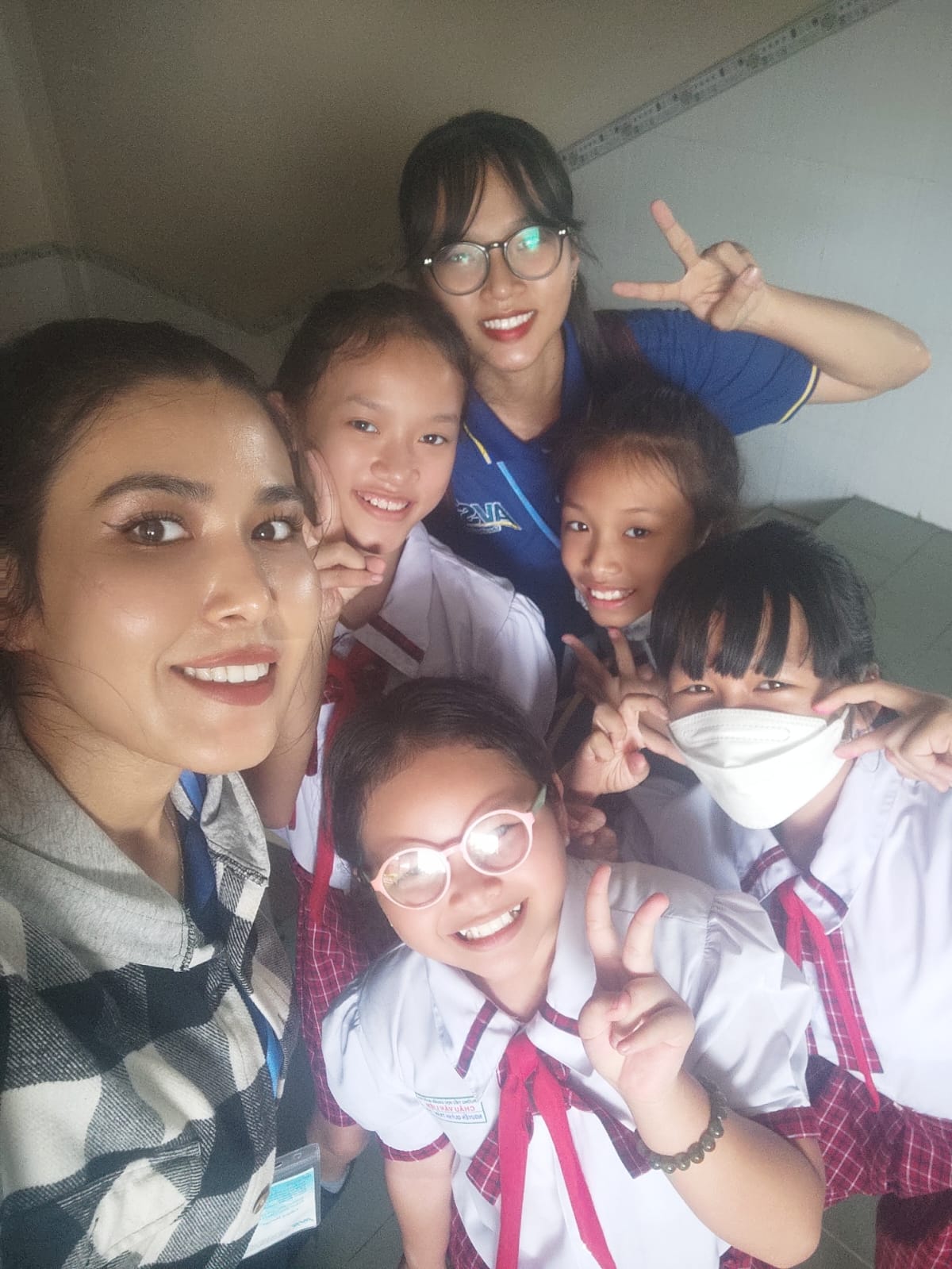
UP2U teachers — Colombia, Tunisia, Philippines, Morocco and more — all working in Vietnam right now.
1. Eligibility & Requirements
Yes.
We've placed 700+ non-native teachers from 32+ countries.
Colombia. Algeria. Tunisia. Brazil. Philippines. Chile, Azerbaijan, Albania Ukraine. Serbia. Morocco.
Schools in Vietnam care about clear communication, classroom energy, and reliability.
Not your passport.
That's literally the entire reason this program exists.
Because while SOME schools prefer native speakers...
Hundreds of schools are actively hiring non-native teachers.
Training centers. Kindergartens. Language schools. Public schools.
The opportunities are REAL.
You just need to know which schools to target... and how to position yourself.
That's what we teach.
A bachelor's degree (in ANY subject) makes the process significantly smoother.
Here's why:
It allows you to get a proper work permit
It makes you eligible for higher-paying positions
It opens doors to international schools and premium training centers
What if you DON'T have a degree?
It's still possible... but more limited.
You'd be working on a business visa instead of a full work permit.
That means:
Visa runs every 3 months (leaving and re-entering Vietnam)
Lower salary range ($800-$1,200/month instead of $1,300-$1,800)
Fewer school options (mostly smaller training centers)
We'll be honest with you upfront about what your situation allows.
If you don't have a degree and want to pursue Vietnam anyway... we'll show you the path.
But if you're CLOSE to finishing a degree? Finish it first. It'll make everything easier.
No.
Any bachelor's degree works.
Engineering. Business. Biology. Art History. Doesn't matter.
Schools care that you HAVE a degree.
Not what it's in.
No.
Many of our most successful placements had zero classroom experience before Vietnam.
In fact... some schools PREFER first-time teachers.
Because you're coachable. You don't have bad habits. You're open to their training methods.
What schools actually care about:
Energy and enthusiasm
Clear communication
Reliability and professionalism
Willingness to adapt
You can demonstrate ALL of that... even with zero experience.
We'll show you how.
Yes.
Most legitimate schools require a 120-hour TEFL certification.
If you already have one? Great.
If you don't? We can source one for you for $180.
It's an online course. Takes 2-4 weeks to complete (depending on how fast you move).
You can knock it out while preparing your application materials.
We recommend a minimum of C1 on the CEFR scale.
How do you know your level?
Take the EF SET test (free at efset.org).
It takes about 90 minutes.
You'll get an accurate score of your reading, listening, and overall level.
If you score C1 or higher? You're good.
If you score below B2? We'll be honest with you about your chances.
Because we're not here to take your money if Vietnam isn't realistic for you.
No.
Vietnam doesn't expect you to sound like a BBC newsreader.
What matters is CLARITY.
Can you be understood easily? Do you speak at a reasonable pace? Can students follow your explanations?
If yes... your accent is fine.
We've placed teachers with Colombian accents, Tunisian accents, Filipino accents...
No.
We've placed teachers in their 40s, 50s, and 60s.
Vietnamese schools value maturity and professionalism.
If you bring enthusiasm, energy, and handle yourself well in interviews?
Age is not a barrier.
In fact... many schools specifically REQUEST older teachers.
They see age as a sign of reliability and experience.
So if you're worried you're "too old" for this...
Stop worrying.
You're not.
Yes.
But you need to demonstrate maturity and professionalism.
That means:
A polished CV
A strong intro video
Professional communication in emails
Energy and confidence in interviews
If you come across as a "backpacker looking for beer money"... schools will pass.
But if you present yourself as a serious educator who happens to be young?
You'll get hired.
We've placed plenty of 22-24 year olds.
This is important.
Vietnamese culture is conservative when it comes to teachers' appearance.
Schools don't want students copying their teachers' style choices.
TATTOOS:
Visible tattoos need to be covered during work hours.
That means:
Long sleeves (if you have arm tattoos)
Pants (if you have leg tattoos)
Makeup or bandages (if you have hand/neck tattoos)
Face or hand tattoos? That's gonna be a problem for MOST schools. Not impossible... but it significantly limits your options.
PIERCINGS:
Remove them during teaching hours.
Earrings are usually fine (especially for women).
But nose rings, eyebrow piercings, lip rings? Take 'em out before class.
Why are schools so strict about this? Because parents are conservative. They don't want their kids thinking tattoos and piercings are "cool" because their teacher has them. So schools play it safe.
Bottom line:
If you can COVER your tattoos with normal work clothes... you're fine.
If you can't... it's gonna be tough.
Yes.
Vietnam is generally tolerant.
While it's not as openly progressive as Thailand...
LGBTQ+ teachers work in Vietnam without major issues.
Most schools won't ask. And they won't care.
That said... Vietnam is still a conservative country in many ways. Public displays of affection (gay or straight) aren't common. So it's more about cultural norms than discrimination.
We've placed LGBTQ+ teachers from multiple countries. None reported significant issues.
Shave it.
Vietnamese schools expect teachers to be clean-shaven. It's a cultural thing.
Teachers are seen as role models... and the "professional" look in Vietnam means no facial hair.
Light stubble? Maybe acceptable at some training centers. But don't count on it.
Full beard? That's gonna be a problem at 90% of schools. Especially public schools and kindergartens. Parents will complain. Admins will ask you to shave.
"But what if my beard is part of my religious practice?"
That's a different conversation. Schools MIGHT make exceptions for religious reasons. But it's not guaranteed. You'd need to address it upfront during interviews.
Bottom line:
If you're attached to your beard... Vietnam might not be the place.
If you're willing to shave for a year or two... you'll have way more options.
Yes. The smartest move when you have 6-18 months until graduation.
Three things to lock down this year:
Pick your TEFL provider and finish the course before you graduate (it's $39–$180, takes 4 weeks)
Build your application file — CV, intro video, school target list — so you're ready to apply the week your degree is conferred
Save $1,500–$3,000 for the move (flights, deposit, first month buffer)
Vietnamese schools won't sign you to a work permit until your degree is in hand. But you can do everything else in parallel.
If you're 12+ months out, also: keep your English active. Watch shows, read books, talk online. The EF SET C1 test is what schools verify against — fluency drops faster than people think.

Schools care about energy & connection — not your passport
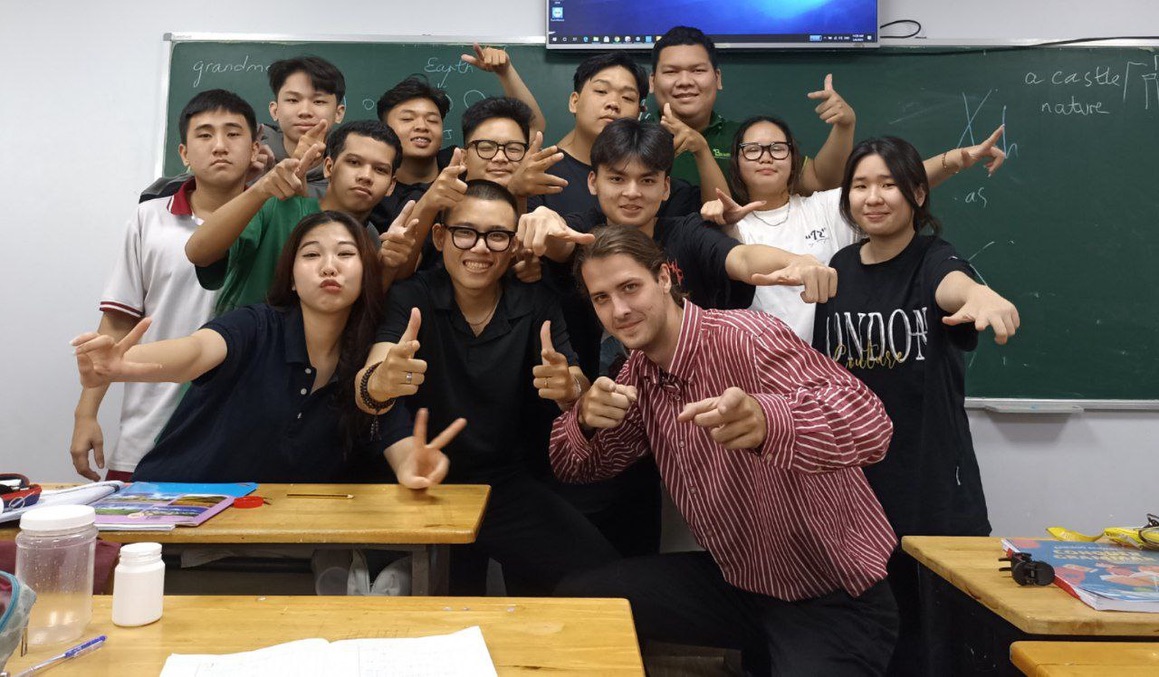
700+ non-native teachers placed since 2017
2. The Application Process
From the moment you start preparation to your first day in a classroom:
Typical timeline: 6-12 weeks
Here's the breakdown:
Week 1-2: Build your CV and intro video
Week 3: Research schools and start applying
Week 4-6: Interview with schools
Week 7-8: Receive offers and evaluate contracts
Week 9-12: Handle visa paperwork and move to Vietnam
Some teachers move faster. Some take longer.
It depends on:
How quickly you complete your materials
Which hiring season you're targeting
How selective you are with offers
Vietnam has TWO main hiring waves:
1) September (the biggest wave)
This is when most schools hire for the new academic year.
2) February/March
This is the second semester hiring wave.
BUT... Training centers, kindergartens, and smaller language schools hire YEAR-ROUND.
So motivated students can find positions in April, May, June, July... basically any month.
It's just easier during the main waves.
TIER 1:
You get immediate access to all 8 modules
You can start watching lessons right away
You get the school database, templates, and all resources
You're added to the private community group
TIER 2:
Same as Tier 1, PLUS...
You submit your CV, intro video and application materials through your T2 client account
You get 2 rounds of specific feedback for the Vietnamese market
You apply once your materials are correct and Vietnam-ready
TIER 3:
Same as Tier 2, PLUS...
Your onboarding call is scheduled within 48 hours
We begin the application process together
UP2U applies to schools FOR you
Tier 1 & 2: We recommend applying to 10-20 schools initially.
You'll likely get 3-5 responses. From those, you'll interview with 2-3. And hopefully receive 1-2 offers. Then you choose the best one.
Tier 3: UP2U handles this FOR you. They apply to their network of vetted schools on your behalf.
Usually 3-7 days.
Some schools respond within 24 hours. Others take 2 weeks.
If you haven't heard back in 10 days? Move on. They're not interested.
Most interviews are done via Zoom or Skype. They last 15-30 minutes.
Schools will ask:
Why do you want to teach in Vietnam?
Do you have teaching experience?
Can you start in [Month]?
What age groups are you comfortable teaching?
Tell us about yourself.
Some schools will ask you to do a short "demo lesson" (5-10 minutes).
We prep you for ALL of this. You'll have scripts. Frameworks. Example answers.
You won't be winging it.
No.
95% of interviews happen remotely.
You only fly to Vietnam AFTER you've signed a contract.
We teach you how to evaluate offers based on:
Salary vs. cost of living
Teaching hours per week
Class sizes
Support and training
Contract length
Renewal likelihood
Red flags to watch for
We'll literally walk you through comparing offers side-by-side.
So you make the best decision for YOU.
Schools asking for money upfront (for "training" or "materials")
Unclear salary structure (commissions only, no base pay)
Excessive teaching hours (30+ per week is a burnout factory)
No clear visa sponsorship process
Vague job descriptions
We cover ALL the red flags in the course.
And for Tier 3, UP2U evaluates every contract FOR you.
Three documents, in this order:
1. Offer letter (week 0)
Issued after you accept verbally. Confirms salary, hours, start date. Not legally binding by itself, but it's your handshake. Keep a copy.
2. Probation contract (months 1–2)
Real signed contract for the first 60 days. Pays roughly 85% of full salary. Either side can walk away during this window. Most teachers pass probation easily — schools rarely fire after committing to onboard you.
3. Labor contract (month 2 onwards)
The "real" contract. Usually 12 months, sometimes 24. Full salary. This is what you bring to immigration for your work permit and TRC.
Why this confuses people: in most countries you sign ONE thing. In Vietnam, the staged process is normal — it's the labor code, not a school playing games. Module 6 walks through what to look for in each document.
Two contract lengths exist:
12 months (language centers, training centers, kindergartens)
Year-round. You teach through summer. Paid every month. This is what most non-natives sign.
9 months (public schools, some international schools)
Follows the academic calendar — September to May. Summer = unpaid. You either travel, do private tutoring, or fly home.
A 9-month gig pays slightly more per month to compensate. Over 12 months it's usually $1,000–$2,000 less than a steady center contract.
If you see "9-month" in an offer, ask: "What's the summer arrangement?" Some schools rehire you in August. Some don't. Don't assume.
3. Money & Payments
Tier 1: $199 (full payment upfront)
Tier 2: $349 (full payment upfront)
Tier 3: $750 ($375 upfront + $375 when you sign your teaching contract)
The fee covers:
Complete 8-module course (46 lessons)
School database (200+ vetted schools)
All templates (CV, intro video, emails, interview scripts)
Private community access
Lifetime updates to the course
Tier 2 & 3 also include:
Personal reviews of your materials
One-on-one feedback and coaching
What the fee does NOT cover:
Your flight to Vietnam
Your visa fees
Your accommodation
Your TEFL certificate (if you don't have one)
Those are separate costs.
Because what you're paying for is PREPARATION and ACCESS. Not just a job listing.
The work we do upfront is what makes the difference between getting hired... and being ignored.
We give you the exact system that's worked for 700+ teachers
We vet the schools so you're not applying blindly
We review your materials so you present yourself professionally
We coach you through interviews and negotiations
All of that happens BEFORE you get hired. That's what the fee covers.
Tier 1: Yes — 7-day money-back guarantee, no questions asked.
If you go through the first few modules and decide this isn't right for you, email us within 7 days of purchase. Full refund. After 7 days, the fee is non-refundable.
Tier 2: Same 7-day money-back guarantee, with one condition.
It applies only as long as you haven't submitted a feedback request. Email us within 7 days of purchase and before you send your first feedback request (of your 2 rounds) for a full refund. The moment you send that first feedback request, the guarantee no longer applies — even if you're still inside the 7 days — because our team has already begun reviewing your materials.
Tier 3: No money-back refund.
Tier 3 is a live placement service — not a course. The moment you join, we start working on your file. Because of that, we can't offer refunds on Tier 3.
What Tier 3 guarantees instead: Placement Continuation. If you follow our process and don't get hired within 2 months of the hiring cycle, UP2U keeps working with you at NO extra cost until you do.
Tier 3 already splits the payment. $375 upfront. $375 only when you sign your contract.
For Tier 1 and Tier 2, full payment is due upfront.
We don't currently offer other installment options.
This is common for students from North Africa, Central Asia, and certain regions of Eastern Europe.
Many students use:
A family member or friend in Europe to make the transfer
Wise (formerly TransferWise)
Crypto (USDT)
We accept:
Wise
Bank transfer via IBAN
Crypto
Contact us directly and we'll help you find a method that works.
We recommend having $1,500-$3,000 before you move.
Here's why:
Flight: $300-$800 (depends on where you're flying from)
Visa fees: $50-$135
Accommodation deposit: $200-$400
First month living expenses: $400-$700
Emergency buffer: $300-$500
Your first salary usually arrives 4-6 weeks after you start teaching. So you need enough to cover that gap.
Some teachers manage with less. Some bring more for comfort. But $1,500-$3,000 is the realistic range.
Depends on your salary and lifestyle.
Average scenario:
Salary: $1,400/month
Rent: $250/month
Food: $150/month
Transport: $30/month
Fun/social: $100/month
Net savings: $870/month
High earner scenario:
Salary: $2,000/month
Living costs: $600/month
Net savings: $1,400/month
Most teachers save $700-$1,200/month. That's maybe MORE than they were making in their entire salary back home.
Yes.
Most teachers use:
Wise (cheap and fast)
Western Union (widely available)
Bank transfers (slower but reliable)
Crypto
Fees are usually 1-3% depending on the method.
First month: $1,200–$1,800
Probation pay (around 85% of contract), no side gigs yet, still learning the city.
Months 3–12: $1,400–$2,100
Full salary kicks in. Most teachers add 5–10 hours/week of private tutoring ($14–$20/hr) by month 4.
Second year: $1,500–$2,500
Three things stack:
Annual raise (5–15%) from your school after contract renewal
Switch to a better school with negotiating leverage ($300–$500/mo jump common)
Side hours dialed in — most year-2 teachers do 20–30 extra hours/month
Real example: Saad from Algeria started at $1,400 with a private school in HCMC. Year 2 he split between schools + tutoring, total around $1,716/mo plus private students. Cost of living: $700/mo. Net savings year 2: about $1,500/mo.
4. Choosing Your Tier
One question answers it:
Do you need certainty... or do you want speed and control?
TIER 3 (Certainty Path):
UP2U applies to schools FOR you
They handle all communication and negotiations
They guarantee continued support until you're hired
Timeline is aligned to September/February hiring waves
TIER 2 (Speed Path):
YOU run the search using our complete system
We review and sharpen your materials before you start
YOU control the timeline (could leave in May, June, July...)
No placement guarantee, but your materials will be professional
Think of it this way:
Tier 3 = "I need someone to hold my hand through this."
Tier 2 = "I just need the roadmap. I'll execute."
Depends on your personality.
If you're a first-timer who:
Cannot afford to fail
Needs certainty over speed
Prefers having experts handle the process
Then Tier 3.
If you're a first-timer who:
Is motivated and willing to hustle
Wants to move as fast as possible
Doesn't mind doing the work yourself
Then Tier 2.
Both work for first-timers. It's just a question of what YOU need.
Tier 1 is probably enough.
You already know how to navigate a foreign country. You already know how teaching abroad works.
You just need the Vietnam-specific system and school database. Tier 1 gives you that.
You can.
Tier 3 gives you access to everything Tier 2 has.
So if you want to run your own search in ADDITION to what UP2U is doing... Go for it.
You're not locked into "only" using UP2U's placements.
5. Life In Vietnam
Yes. Vietnam is one of the safest countries in Southeast Asia.
Low violent crime. Stable government. Friendly locals. Women travel solo there routinely without issues.
The biggest "safety" concerns are:
Motorbike accidents (traffic is chaotic)
Petty theft (bag snatching in touristy areas)
But compared to most countries? Vietnam is extremely safe.
No. Teaching is done entirely in English.
Daily life (grocery shopping, restaurants, transport) is manageable without Vietnamese in any major city.
That said... learning basic phrases helps.
"Hello" (Xin chào)
"Thank you" (Cảm ơn)
"How much?" (Bao nhiêu tiền?)
Most expat teachers never become fluent. They pick up survival phrases and get by just fine.
Rent:
Shared apartment: $150-$250/month
Studio apartment: $250-$400/month
Food:
Street food meal: $1-$3
Local restaurant: $3-$7
Western restaurant: $7-$10
Groceries (monthly): $100-$150
Transport:
Motorbike rental: $30-$50/month
Grab (rideshare): $1-$3 per trip
Total monthly cost: $400-$700 (depending on lifestyle)
Vietnam is long and narrow. So the weather varies by region.
HANOI (North):
4 seasons. Hot summers (June-Aug). Cold winters (Dec-Feb... like 10°C cold)
DA NANG (Central):
Warm year-round. Rainy season (Sep-Dec). Best weather: Feb-May
HO CHI MINH CITY (South):
Hot and humid all year. Rainy season (May-Nov). Dry season (Dec-Apr)
Most teachers prefer Da Nang or HCMC for consistent warmth.
No. Always drink bottled or filtered water.
A 20-liter jug costs about $1-$2 and lasts a week. Most apartments have water delivery services.
Incredible. Vietnam is a food lover's paradise.
Pho (noodle soup)
Banh mi (sandwiches)
Bun cha (grilled pork with noodles)
Fresh spring rolls
Coffee culture is massive
Street food is cheap and delicious. You can eat amazing meals for $2-$3.
Western food is available too (pizza, burgers, pasta)... but more expensive ($7-$15).
Yes. Vietnam has a huge expat community. Teachers. Digital nomads. Business owners.
There are groups, meetups, language exchanges, social events. You'll meet people easily.
Plus... Your fellow teachers at your school become your automatic social circle.
Most teachers say they made better friends in Vietnam than they ever did back home.
Vietnam has a large expat and local dating pool. Apps like Tinder, Bumble, and Tandem are active.
If you're single and social... you'll meet people.
That said... Vietnamese culture is more conservative than Western culture. So dating norms are different. But plenty of expat teachers date (both locals and other expats).
Yes. Vietnam is small and well-connected.
Popular weekend trips:
Ha Long Bay (from Hanoi)
Hoi An (from Da Nang)
Dalat (from HCMC)
Phu Quoc Island (beach paradise)
Domestic flights are cheap ($30-$60). Buses are even cheaper ($10-$20). Most teachers travel every month.
Yes. Vietnam is perfectly positioned for exploring Southeast Asia.
Cheap flights to:
Thailand ($50-$100)
Cambodia ($40-$80)
Malaysia ($60-$120)
Philippines ($80-$150)
Most teachers use school holidays to explore the region.

Food, culture, and daily life you'll actually enjoy
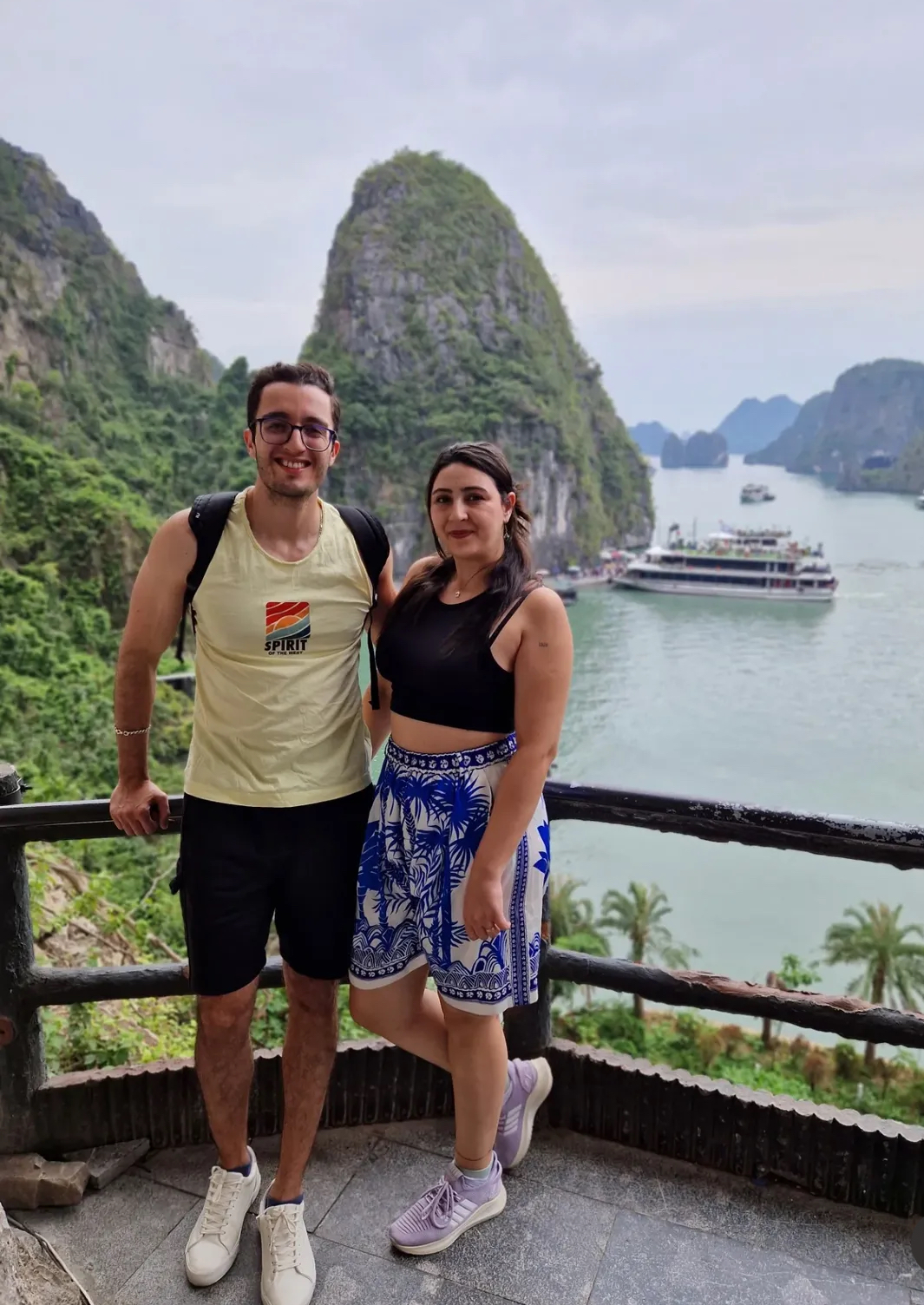
Weekends look like this on a teacher's salary
6. Visas & Legal Stuff
If you have a degree... you'll get a work permit (the legal way to work in Vietnam). Your school will sponsor this. It's valid for 1-2 years (depending on your contract).
If you DON'T have a degree... you'll work on a business visa and do visa runs every 3 months.
Not with a full work permit, no.
But you CAN work on a business visa with periodic renewals. It's a legal gray area. Many teachers do it. Schools are aware of it.
Just know:
You'll earn less ($800-$1,200/month)
You'll do visa runs every 3 months
You'll have fewer school options
But it's possible.
Leaving Vietnam every 90 days to reset your tourist or business visa.
Most teachers fly to:
Bangkok, Thailand
Siem Reap, Cambodia
Kuala Lumpur, Malaysia
Costs about $100-$200 per trip (flight + accommodation). You stay 1-2 nights, then fly back.
It's annoying... but some people see it as forced mini-vacations.
Heads up: as of February 2026, Ho Chi Minh City requires TWO visas before you can apply for a Temporary Residence Card (TRC).
What that means in practice:
You land on a tourist visa (1 month)
You convert to a business visa with school sponsorship (3 months)
Then you convert again to a work permit-tied visa
Then you apply for the TRC
The middle step is new. You'll do at least one visa run (usually to Cambodia) during the process. Most teachers run to Phnom Penh — bus is $40, hotel is $20, total $200–$300 for the trip.
Total time from landing to TRC went from ~8 weeks to ~12–14 weeks. Schools know this. They expect it. Just budget for the extra trip.
Hanoi and Da Nang haven't changed — only HCMC. Module 7 has the updated step-by-step for both cities.
7. Teaching & Classroom
Typical contract: around 100 teaching hours per month. That's actual classroom time — no office hours.
Some schools require fewer hours, some more. We teach you how to evaluate schedules and negotiate the best terms during the hiring process.
Depends on the school type.
Kindergartens: Ages 3-6
Training centers: Ages 6-16
Public schools: Ages 10-18
Adult centers: Ages 18+
Most non-native teachers work at training centers or kindergartens. So you'll mostly teach kids ages 5-15.
Depends on the school.
Kindergartens: Basic vocab, songs, games, phonics
Training centers: Grammar, reading, writing, speaking, test prep
Public schools: Follow the national curriculum
Adult centers: Business English, conversation practice
Most schools provide lesson plans and materials. You're not creating everything from scratch.
Good schools? Yes. You'll have:
Training (before you start)
A teaching coordinator (who checks in regularly)
Fellow teachers (who help with questions)
Lesson materials (provided by the school)
Other schools? You're on your own.
That's why we teach you how to identify red flags during the interview process.
Yes. Most schools train you. They'll show you:
How to structure a lesson
How to manage a classroom
How to use their curriculum
Plus... We include a "Teaching Fundamentals" crash course inside the program. So you're not walking in blind.
Welcome to teaching.
Classroom management is a skill. It takes time to develop.
But here are the basics:
Set clear rules from Day 1
Use positive reinforcement (stickers, praise, games)
Stay calm and consistent
Build rapport with students
Most discipline issues come from boredom. If your lessons are engaging... kids behave better. We cover classroom management strategies in the course.
No. Classes are taught entirely in English. That's the whole point. Immersion learning.
For kindergartens specifically — yes. Most of them want energetic young female teachers because that's what Vietnamese parents picture when they imagine the "ideal" English teacher for 4-year-olds.
You'll get rejected, and it won't be about your teaching skill.
Where you do fit:
Training centers — they place by skill, ages 6-16, plenty of demand
Adult learners and business English — your maturity reads as expertise, not "too old"
Public schools — they care about credentials, not vibes
International schools (if you have a degree and ideally a teaching certificate)
Real numbers: we've placed dozens of men 35-55. Average salary actually goes UP with adult learners and public schools ($1,400–$1,800/mo contract, more with extra classes) compared to KG ($1,200–$1,500/mo). Don't fight the wrong segment. Aim at the segment that wants you.

Language center classes — creative, fun, and well-paid

The bond teachers form with their students is real
8. Safety & Culture
Yes. Vietnam is one of the safest countries in Southeast Asia for solo female travelers and teachers.
That said... Use common sense:
Don't walk alone in dark alleys at 2am
Keep your bag secure in crowded areas
Use reputable transportation (Grab, not random motorbike taxis)
We've placed hundreds of women. None reported serious safety issues.
Honestly? Maybe.
Vietnam is generally welcoming. But like ANY country... some people have biases.
Non-native speakers might occasionally face:
Assumptions that you're not as qualified
Lower salary offers compared to native speakers
Schools that prefer native speakers
People of color might occasionally experience:
Stares (especially in smaller cities)
Curiosity (kids touching your hair, asking questions)
Assumptions based on appearance
Is it malicious? Usually not. Vietnam isn't a super diverse country. So people are curious more than hostile.
That said... We've placed teachers from South Africa, Morocco, Colombia, Tunisia, Brazil, the Philippines... And they're all still in Vietnam.
So while challenges exist... they're not dealbreakers.
Vietnamese culture is:
Respectful and polite
Family-oriented
Collective (not individualistic like the West)
Food-obsessed (meals are social events)
Things that are different:
Personal space is smaller (people stand closer)
Punctuality is... flexible
Saying "no" directly is considered rude (people hint instead)
Saving face is important (don't embarrass people publicly)
It's an adjustment. But most teachers adapt within a few weeks.
Yes. Beer is EVERYWHERE. Bia hoi (fresh beer) costs 25 cents a glass. It's a huge part of Vietnamese social culture.
That said... Teachers are expected to be professional. Don't show up to work hungover. Don't get drunk at school events. Use common sense.
Depends on the school.
Public schools: Business casual (collared shirts, dress pants)
Training centers: Smart casual (polo shirts, jeans are usually fine)
Kindergartens: Comfortable clothes (you'll be sitting on the floor)
General rule:
No tank tops
No shorts (unless you're teaching kindergarten)
Look clean and professional
9. Partners & Families
Yes. Many teachers move with partners.
Your partner would enter Vietnam on a tourist visa initially (valid for 30-90 days). Then they can:
Extend the visa
Look for their own teaching job
Do visa runs every 3 months
There's no legal issue with a partner accompanying you.
Yes. If they meet the same requirements (degree, TEFL, clear English)... They can apply for teaching jobs using the same system.
In fact... Many couples teach at the SAME school. Schools often like hiring couples. You're more stable. Less likely to bail.
It's possible... but complicated.
Things to consider:
Schooling for your kids (international schools are expensive)
Healthcare (make sure you have insurance)
Space (family apartments cost more)
Stability (kids need routine)
We've had teachers bring their kids. But it's not common. If you're considering it... email us. We'll walk you through the logistics honestly.
10. What If Scenarios
Most teachers love Vietnam. But if you hate it?
You have options:
Finish your contract (usually 12 months) and leave
Break your contract early (not ideal, but possible)
Transfer to a different city or school
We cover "exit strategies" in the course. Because we're not here to trap you.
Vietnam has good healthcare in major cities.
For minor stuff (cold, flu, stomach bug):
Local clinics are cheap ($10-$30)
Pharmacies sell most meds over-the-counter
Many teachers do. After your first year... you can:
Renew your contract
Switch to a higher-paying school
Move to a different city
Transition into management or training roles
We've had teachers stay 3, 4, 5+ years. Vietnam has a way of growing on you.
Tier 1: you have 7 days from the date of purchase to request a full refund, no questions asked. After that... sales are final.
Tier 2: same 7-day window, with one condition — it only applies before you've submitted a feedback request. The moment you send the first of your 2 feedback rounds, the money-back guarantee ends, even if you're still inside the 7 days, because our team has already started reviewing your materials.
But... You still have LIFETIME access to the program. So even if you change your mind now... You can come back in 6 months, a year, whenever. The access doesn't expire.
Tier 1: yes if it's the first 7 days. Tier 2: yes if it's the first 7 days AND you haven't submitted a feedback request yet — once you send your first feedback request, the money-back guarantee ends even inside the 7 days. After the window closes, no refund on the course itself, but the system is still yours.
If you're getting rejected after multiple interviews, the issue is almost never "you", it's usually:
Wrong school segment (kindergarten when you should target adults, etc.)
Intro video pacing or energy is off
Accent perception is harder to clear than your fluency suggests (separate issue, Accent Advantage exists for this)
You're applying during a slow hiring window (mid-November to mid-January, mid-April to mid-July are dead zones)
What we do:
If you're a Tier 2 client, use one of your 2 feedback rounds to get your materials reviewed again — go through the course videos and documents again first so the round isn't wasted
Tier 3 (Mentorship) keeps working with you at no extra cost until you sign: that's the Placement Continuation guarantee
Tier 1: you have the school database, the scripts, and the playbook. Most successful Tier 1 placements came after 30–60 interviews, not 5. Stamina is part of the system.
If you genuinely cannot get placed after a full hiring cycle, write to hi@up2uagency.info. We'll go through your file together.
Still Have Questions?
We get it. This is a lot of information. And you probably still have SPECIFIC questions about YOUR situation.
WhatsApp Us
+1 (555) 772-9190
Fastest way. Tell us your situation, we'll give you an honest answer.
Email Us
hi@up2uagency.info
We reply within 24 hours.
We're not hiding behind a sales page. We're here to help you make the RIGHT decision. Even if that means telling you Vietnam isn't right for you.