
Getting around is one of the first things new teachers ask about. Good news: transport in Vietnam is cheap and easy. Most teachers spend under $40 a month to get everywhere. You do not need a car. You do not even need to own a motorbike. This guide covers every way teachers get around Vietnam, what each one costs, and the licence rules to know before you ride.
Do You Need a Car in Vietnam?
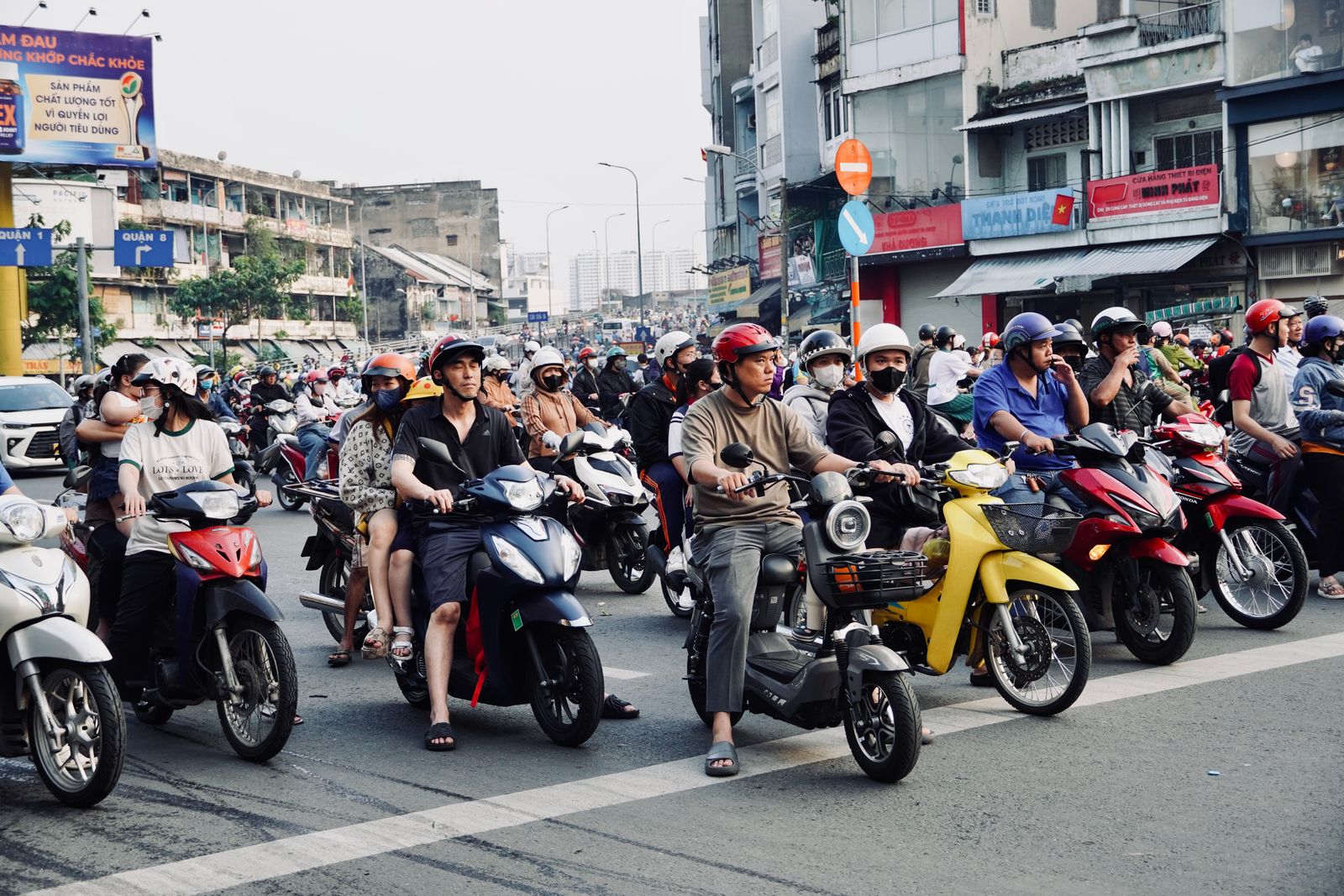
No. Almost nobody drives a car here. Cars are slow in the cities, and parking is hard to find. The whole country moves on two wheels. A motorbike or a quick app ride takes you anywhere you need to go. Skip the car. You will not miss it.
Most Teachers Ride a Motorbike
The motorbike is the heart of daily life in Vietnam. Streets fill with them morning and night. For a teacher, a bike means freedom. You ride to work, to the market, to a cafe, to the beach on your day off.
You have two choices: rent or buy.
Renting is the easy start. A reliable Honda or Yamaha rents for $40 to $60 a month, and the shop fixes it if it breaks. You hand it back when you leave the country. Most new teachers rent for their first few months while they learn the roads.
Buying makes sense if you stay a year or more. A used automatic scooter, like a Honda Vision or a Yamaha, costs $300 to $500. A used semi-automatic Honda Wave costs less. Here is the nice part: you can sell it again when you leave, often for close to what you paid.
A real example. One of our teachers bought a Piaggio Liberty scooter for 8.5 million dong, about $325. She has ridden it every day for a year and a half. When she sells it, she will get around 2 million dong back, about $75. So the bike cost her roughly $250 over 18 months, close to $14 a month. Oil changes are cheap, and the odd repair costs almost nothing. Spread over the time you ride it, owning a bike in Vietnam is nearly free.
Petrol is cheap too. A full tank costs about $3 to $4 and lasts a week of daily riding.
A quick tip for your first bike: pick an automatic. They are easier to ride in city traffic than the semi-automatic models. Ask the shop to test the brakes and tires in front of you before you take it.
Never Ridden a Bike? You Will Be Fine
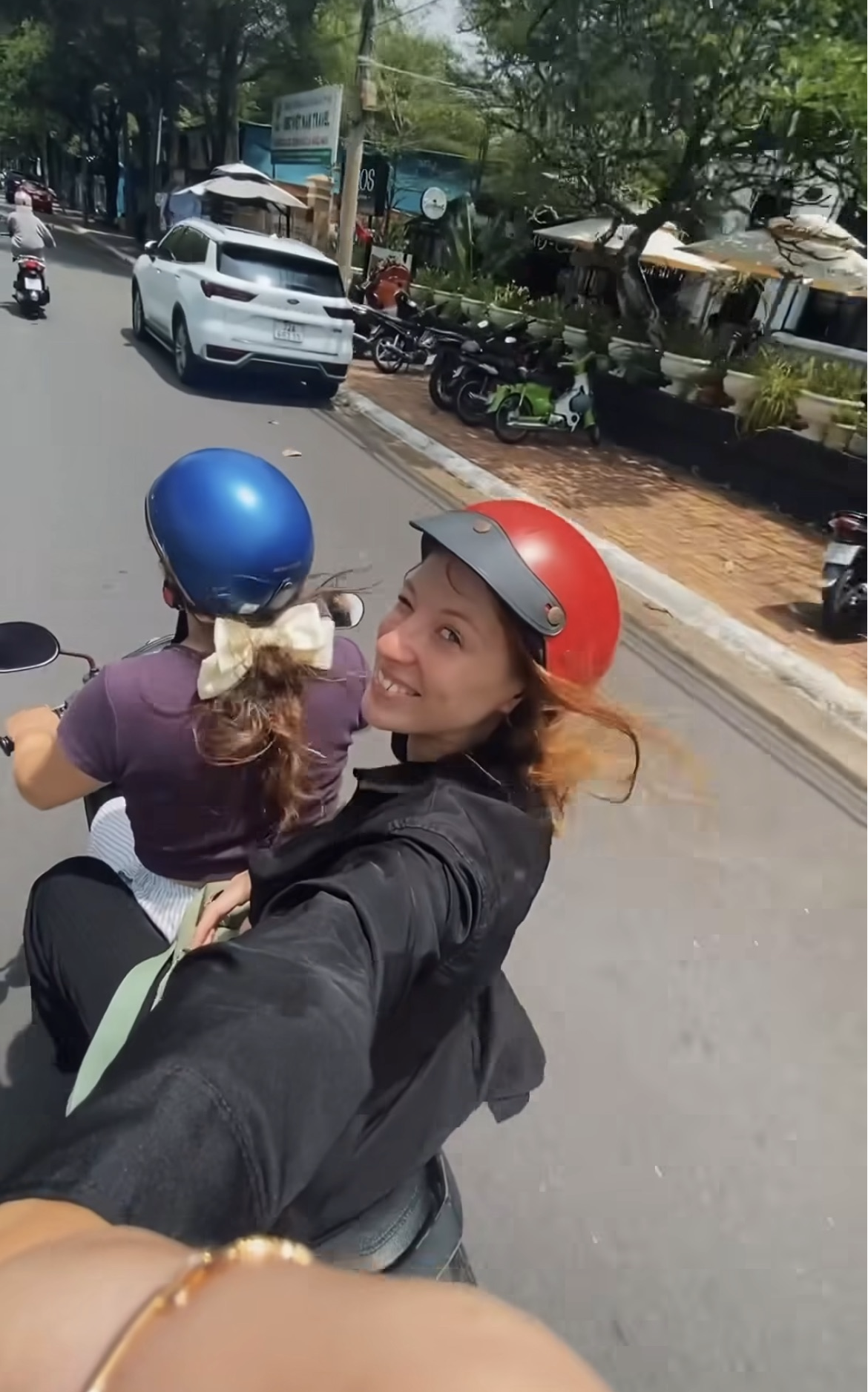
Plenty of our teachers had never touched a motorbike before Vietnam. Do not worry about it. If you can ride a bicycle, you can ride a motorbike. It is the same balance, with a motor to do the work.
City traffic looks wild on day one, but it is slow. The average speed in town is about 30 km per hour. Nobody is racing. People roll along and flow around each other.
Even teachers with zero experience are riding on their own within a month. Start on quiet streets, go slow, and it clicks faster than you think.
See What You Would Earn in Vietnam
A teaching salary covers transport, rent, food, and savings with room to spare. Take the 2-minute quiz to see your number.
No email required to start. Takes 2 minutes.
The Grab App: Bikes and Cars on Demand
Grab is the Vietnamese version of Uber. You will use it every week. The app books two things: a motorbike taxi, where you ride on the back, or a private car.
A Grab bike ride across town costs $0.30 to $1. A Grab car costs more but is still cheap. From the airport into the city, a Grab car runs $8 to $15 in Ho Chi Minh City and $12 to $20 in Hanoi. From Da Nang airport it is $5 to $8.
Set up the app before you arrive. Buy a Vietnamese eSIM from trip.com or Klook for $5 to $10. It works the moment you land, and Grab needs it to reach your driver. The price shows in the app before you book, so there is no haggling and no surprise at the end.
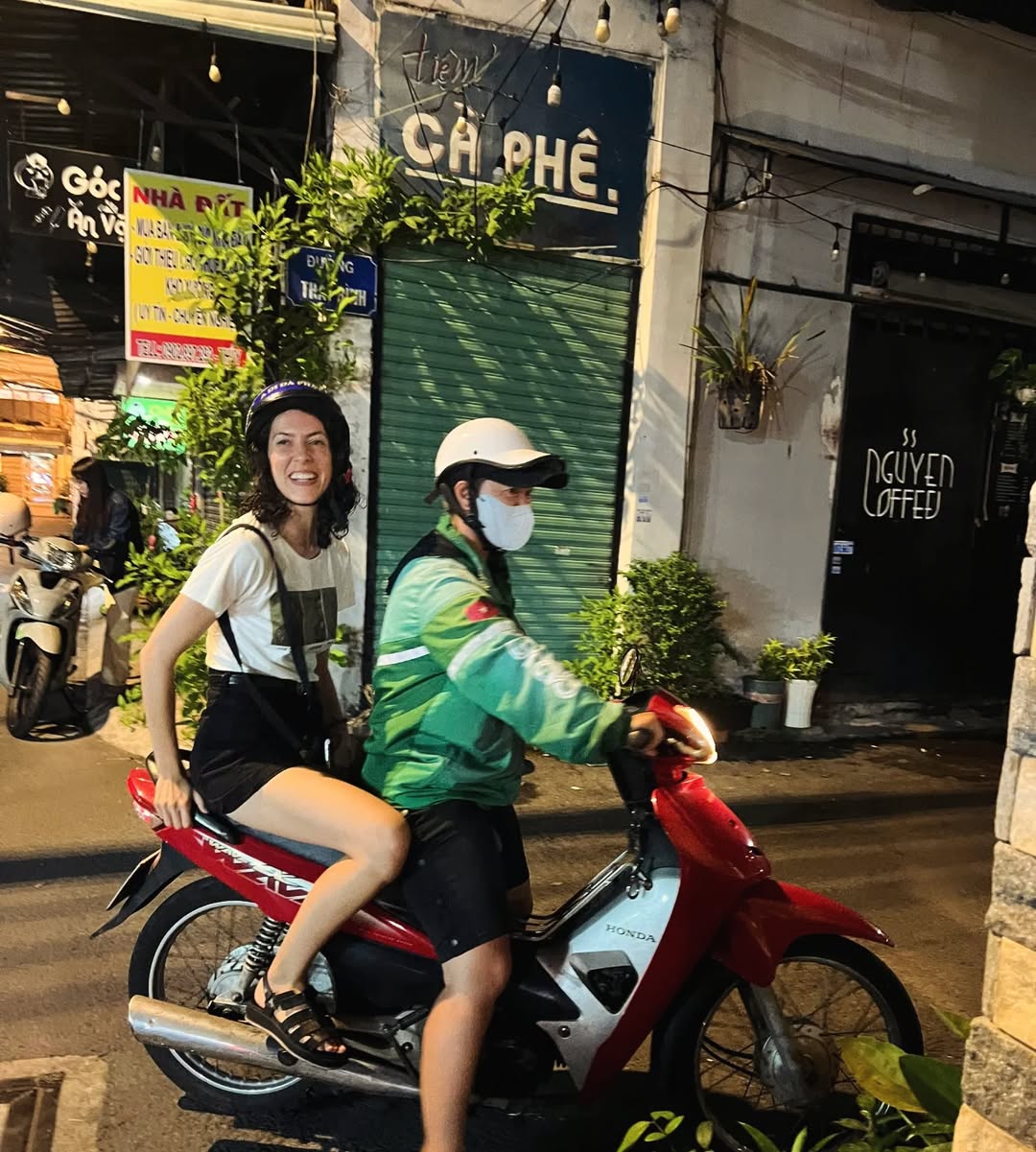
Many teachers skip the motorbike and use Grab for everything. Even then, you would struggle to spend more than $60 a month on rides.
Taxis: When to Call One
Regular taxis still run in every city. They are useful at night, in heavy rain, or when you have luggage. Two firms have a good name for honest meters: Mai Linh, with green cars, and Vinasun, with white cars. When you can, book through the Grab app instead, so the price is fixed up front. Avoid the taxi touts who wait outside airports. They turn off the meter and overcharge.
Why a Bike Makes Your Work Life Easier
Here is a real reason to learn. Many teachers in Vietnam work at two or three schools, in different parts of the city. You move between them during the week. With your own bike, that is easy. You leave when you want, and you are not waiting on anyone.
In smaller cities there is less public transport and fewer taxis around. A bike is the difference between feeling stuck and feeling free. This is why most teachers end up riding, even the ones who swore they never would.
Buses and Trains for Weekend Travel
This is where Vietnam shines. A round-trip bus or train ticket to another city costs $10 to $20. Sleeper buses run overnight between most cities, so you save a night of hotel money. The train along the coast is slow, but the views are some of the best in Asia.
A weekend away costs little. A clean hotel runs $15 to $30 a night. Many teachers explore a new city every month or two, because the price makes it easy. Da Nang beaches, Ha Long Bay, the old streets of Hoi An, all sit a cheap ticket away.

Do You Need a Driving Licence to Ride?
Yes, if your bike is over 50cc, and most bikes are. Here are the real rules, plain and honest.
To ride fully legally you need one of two things: a Vietnamese driving licence, or an International Driving Permit from the 1968 Vienna Convention. Read this part twice. An IDP issued under the older 1949 rules, the common type in the United States, does not work in Vietnam. Check which type your home country issues.
Bikes under 50cc need no licence at all. Some teachers start on one of these small bikes.
Here is the honest reality. Many teachers ride with a home licence that is not the right international type, or with none at all. Police stops are rare, around one in a hundred, and usually end with a small fine on the spot. It is not a deal breaker, and it does not stop anyone from teaching.
Still, sorting your licence is the cleaner path. Once you have your work permit and residence card, you can convert your home licence to a Vietnamese one. It is simple and cheap. The real reason to bother is insurance: if you crash without a valid licence, your insurance may not cover your medical bills.
Helmets and Staying Safe
The law requires a helmet for the rider and the passenger. Wear one every time, even for a two-minute ride. Buy a good one, not the thin plastic kind sold on street corners.
Traffic is the main risk in Vietnam, more than crime. The roads look like chaos on day one, but there is a rhythm under it. Go slow your first weeks. Ride in the right-hand lane. Watch the bikes around you, not only the road ahead. Use your horn the way locals do, as a friendly note that says "I am here," not as anger. Most teachers feel at home on a bike within a month.
What Teachers Spend on Transport Each Month
Here is a real monthly transport budget for a teacher in Vietnam.
Compare that to a metro pass, a car payment, or daily ride apps back home. In Vietnam, transport is a rounding error in your budget. The money you save here is part of why teachers put away $500 to $1,700 a month.
What It Feels Like to Ride
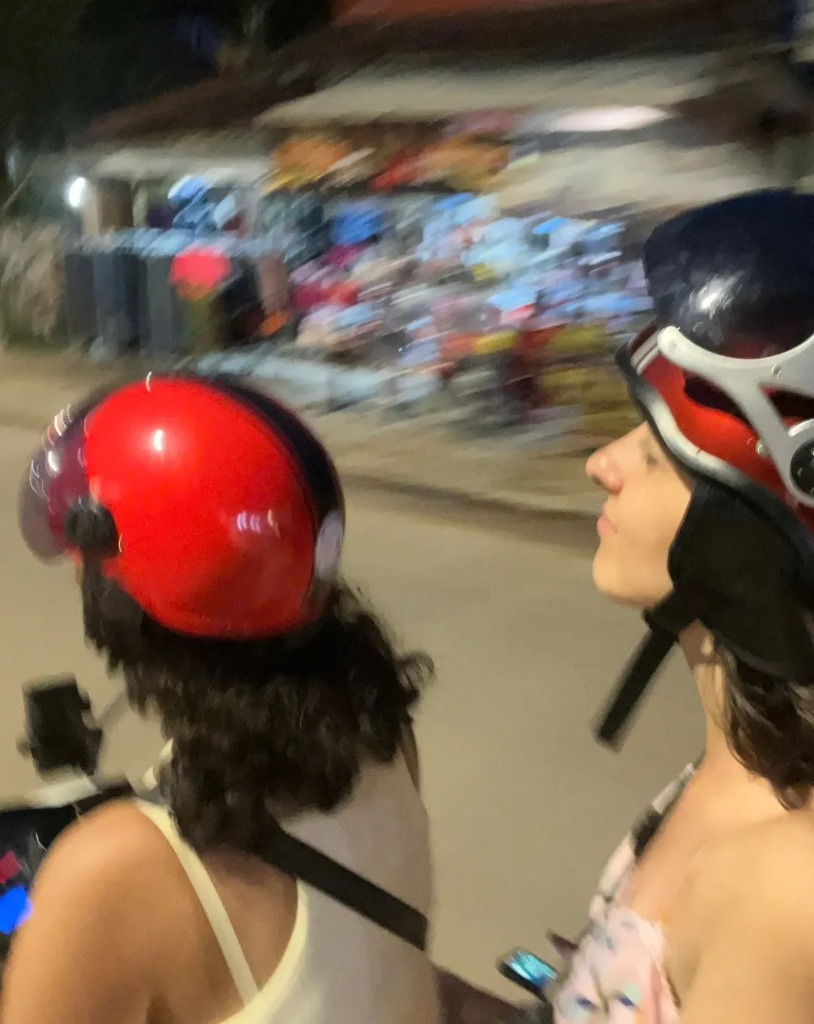
Here is the part nobody puts in a guide. You finish work, you get on your bike, you put in your headphones, and you ride home through a city that still feels new. You look around at the lights and the life and everything you moved across the world for, and it hits you: you are the main character of your own movie. A lot of teachers say the daily ride is the thing they miss most when they go home.

Frequently Asked Questions
Can I get around Vietnam without a motorbike?+
Yes. Grab bikes and cars cover everything you need. Many teachers never own a bike and still spend under $60 a month on transport.
How much does a motorbike cost in Vietnam?+
Renting is $40 to $60 a month, with repairs included. A used scooter to buy is $300 to $500, and you can sell it when you leave, so the real cost can be under $15 a month. Petrol is about $3 to $4 a tank.
Is it safe to ride a motorbike in Vietnam?+
Traffic is busy but slow, around 30 km per hour in town. Wear a helmet, go slow at first, and ride in the right lane. Most teachers adjust within a month. Traffic, not crime, is the main risk to watch.
Do I need a licence to drive in Vietnam?+
For bikes over 50cc, yes: a Vietnamese licence or a 1968-convention International Driving Permit. The 1949-type IDP does not work here. In practice many teachers ride without the right licence and stops are rare, but a valid licence matters for your insurance. You can convert your home licence after you get your work permit.
How do I get from the airport to my apartment?+
Book a Grab car in the app, not from a taxi tout. It costs $5 to $20 depending on the city. Set up a Vietnamese eSIM before you land so the app works right away.
Plan Your Move with Real Numbers
Get the free 2026 Vietnam Teacher Salary Guide and see the full picture, transport included, before you book a flight.
No email required to start. Takes 2 minutes.