
Bárbara is a Chilean teacher in Vietnam. Two years ago she was working as an engineer in Santiago, Chile, in the career she had studied. She quit the job, the lifestyle, and most of the assumptions she had been making about her own next steps.
She spent a few months tutoring English to local students through word of mouth, then saw an Instagram reel about teaching English in Asia, met the requirements, signed up with UP2U, and landed in northern Vietnam by September. Her contract: $1,100 a month for 80 teaching hours, with free housing provided by her school.
A year later she went back to Chile. She loved Vietnam. She just wanted to build her online tutoring business next, and the move from Vietnam back home (with a stop in Bali) gave her the room for it. This is the full breakdown of what she did in between, in case you are a Chilean teacher, or a Latin American teacher of any kind, considering the same move.

From Engineer to English Tutor
Bárbara studied engineering and worked in the field after graduating. Two years before Vietnam she made the call that ends a lot of corporate careers in Latin America: she quit without knowing exactly what was next.
"I was in a stage where I did not know what I wanted to do, a stage of introspection, of getting to know myself," she said.
English had always been the language she enjoyed but never the career she pictured. By chance, she started giving lessons to people she knew. The word-of-mouth turned into a small steady tutoring practice over a few months. She liked teaching more than she expected to.
She Saw a Reel and Almost Didn't Trust Us
She found UP2U the way most of our Latin American clients find us: through an Instagram reel.
She followed the page. She read the posts. She watched the testimonials. And like most people in her position, she paused on the obvious question: was this real, or was this another agency that takes your money and disappears?
She messaged a few of our existing clients who showed up in our content. They confirmed it was not a scam, but did not give her much beyond that. She decided to trust the look of the team and the professionalism of the materials and signed up in May.
The process from there took roughly four months:
- An intro video, the first filter to check the match. - A TEFL certification course, online, about one month. - A demo lesson video, prepared with guidance from our team. - CV and demo sent to school employers in Vietnam. - Her first interview in August. A "no" first, then a "yes" a few days later (Vietnamese employers change their minds often, this turned out to be a recurring pattern she noticed later). - Signed contract, bought tickets, landed first week of September.

She Landed in Vietnam on the Day a Typhoon Hit
The first week of September she arrived in northern Vietnam. The exact day she landed, a typhoon hit. Schools across the region suspended classes for several weeks.
Which meant: she had almost no work in her first month. The only places open were a few English centers that ran private lessons. Her first paycheck was small.
And then she discovered the other thing nobody had told her: the school year here pays out on the 20th of the month, but on the 20th of the month AFTER the one you worked. So her first proper paycheck did not arrive until the following month.
Her practical advice for anyone arriving here: bring enough cash to live for two to three months without income. Vietnam is cheap, so the absolute number is not huge, but the timing catches people.

The Mix: Public Schools, Kindergartens, English Centers
Bárbara's contract was for 80 hours a month at $1,100. The more typical contract for new arrivals is 100 hours at $1,200, the minimum we place, with the exact number depending on city and experience.
Her schedule was a mix: public schools, kindergartens, and English centers all in the same week. This is common for first-year teachers in our placements, especially outside HCMC and Hanoi.
Class durations vary by type. Public school classes run 35 minutes, kindergarten classes 45 minutes, English centers slightly longer. Public schools and kindergartens always come with a Vietnamese teaching assistant who handles classroom order and translates when the kids cannot follow English instructions.
Lesson materials and presentations were pre-prepared for her by our team in most cases. She designed her own materials only for the English center classes, and even then within the curriculum the center set.
"At first it was challenging because it was the first time I worked with so many kids, in a culture and a language totally different from mine," she said. "But honestly I have fun. I am entertained."



The Money Side
Two practical money items worth flagging from her experience.
First: the $460 to legalize her IELTS and TEFL certificates in Vietnam. This is a real cost, paid upfront on arrival, and most teachers underbudget it.
Second: the payment cycle. Salaries here run on the 20th of the following month. Your September work is paid out on October 20th. Bring enough cash to live for two to three months without income.
Payment itself is in Vietnamese Dong, deposited to a local bank account you open on arrival. The whole country runs on QR-code app payments, even in local markets, so a Vietnamese bank account replaces almost all cash needs within a week of setting it up.
Bárbara's own video on her year in Vietnam, in Spanish. She covers the contract, the agency process, the cost of living, and everything she wishes she had known before flying out.
The Things UP2U Did She Was Not Expecting
Three things she mentioned in the video that we genuinely under-communicate to new clients.
**Free housing through her school.** Bárbara did not pay rent during her year in Vietnam. The housing came directly from her school as part of the contract, which is something we negotiate for on certain placements (particularly outside HCMC and Hanoi). She covered only the utilities. Honest caveat: provincial schools sometimes include housing, but it is often a modest room rather than a full apartment. Schools in HCMC and Hanoi almost never include housing, and rent there runs $300-$500 a month for a studio. Bárbara's placement happened to be one of the housing-included ones.
**Pre-prepared lesson materials.** "The girls from the company send me the classes and presentations already done," she said. For a first-year teacher with no classroom experience, this is the difference between burning out from lesson prep on weekends and actually enjoying the work.
**Continued contact after she landed.** "Until today I maintain contact with them, and they have always been keeping an eye on me." This is the part that does not show up in the marketing but matters most in month two when something goes wrong (a school changes its mind, a payment is late, a visa needs renewing). Having a local Vietnamese-speaking team on your side instead of figuring it out alone is the actual product.

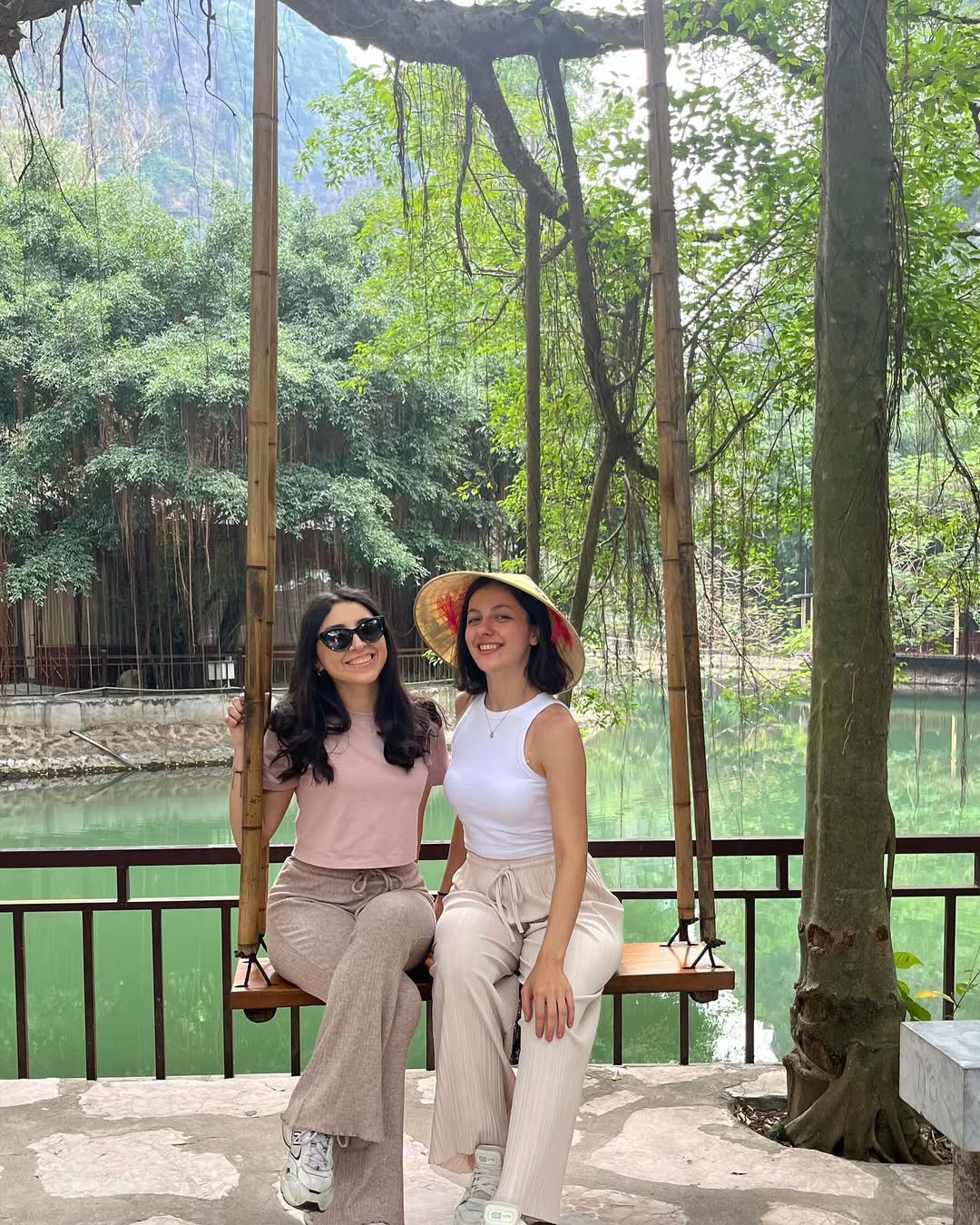

Every woman in these photos is an UP2U teacher. Different countries, different stories, all arrived in Vietnam alone. They found each other here. This is the part of the placement nobody can describe in advance, and the part that ends up mattering most.
What She Wishes She Had Known
- Budget $460 for document legalization on arrival. This wasn't broken out as a line item when she signed, and it landed as a real cost in week one. Every arrival cost is now itemized on our cost-breakdown page so nobody walks in blind.
- Salaries are paid on the 20th of the month AFTER the one you worked, not the same month. Bring enough cash for two to three months of living costs.
- Vietnamese employers change their minds often. She got a "no" then a "yes" on her first contract. Do not take a single "no" as final, and do not get attached to the first offer.
- Da Nang has many native English speakers competing for jobs. Northern Vietnam and smaller cities have more demand for non-native teachers and easier placements.
- Learn to drive a motorbike. She had no experience before arriving, was scared at first, learned in the first weeks, and now uses an automatic motorbike every day. It is the cheapest and fastest way to move around.
- For class ideas, search YouTube and Pinterest. Most experienced teachers in Vietnam build their own inspiration library from those two platforms.
- Do not be selective on your first contract. Take what is offered if the conditions are decent. Selectivity comes after you have a year of Vietnam experience on your CV.
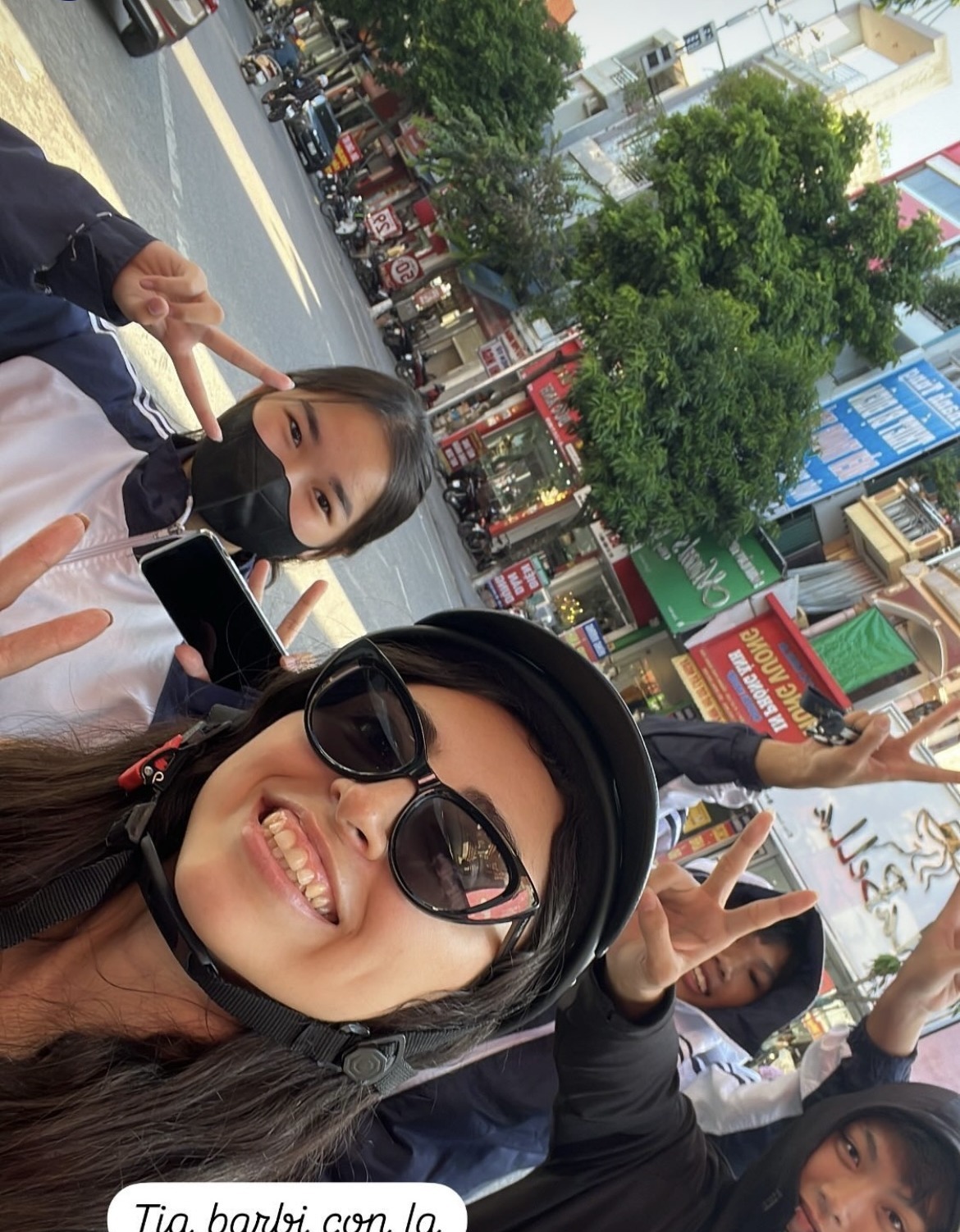
She Kept Thinking People Would Rob Her. They Didn't.
The cultural difference she talks about most, in her own words to us:
In Chile we don't trust anyone. Here, they are very open and friendly. For example, I want to ask someone for an address and they usually take my phone to see it, and my Chilean mentality thinks they will steal my phone, haha. Or some random guy offered me a ride home, and I said to myself, he is going to kidnap me, hahah. But no, he was just a nice guy.
This is one of the harder-to-describe shifts that happens when you move from a low-trust culture to a high-trust one. Teachers from Latin America, Eastern Europe, and parts of North Africa often grow up in countries where you protect your phone, your bag, your address, and your assumptions about strangers. The first month in Vietnam they spend waiting for the scam, the theft, the catch.
Then nobody scams them. Nobody steals their phone. The random guy who offered them a ride home really was just being friendly.
This is one of the gifts of the place that does not show up in salary calculations. It does show up in your shoulders.

What She Earned in Chilean Pesos
For Chileans reading this and trying to do the math, here are Bárbara's numbers translated into Chilean pesos at the rate that held during her contract:
For context: the average Chilean engineering salary runs 1,300,000-1,800,000 CLP a month before tax. The teaching salary in Vietnam is lower in absolute terms, but with rent at zero and groceries running a fraction of Santiago prices, the take-home math often comes out close to even, with a year of international classroom experience added on top.
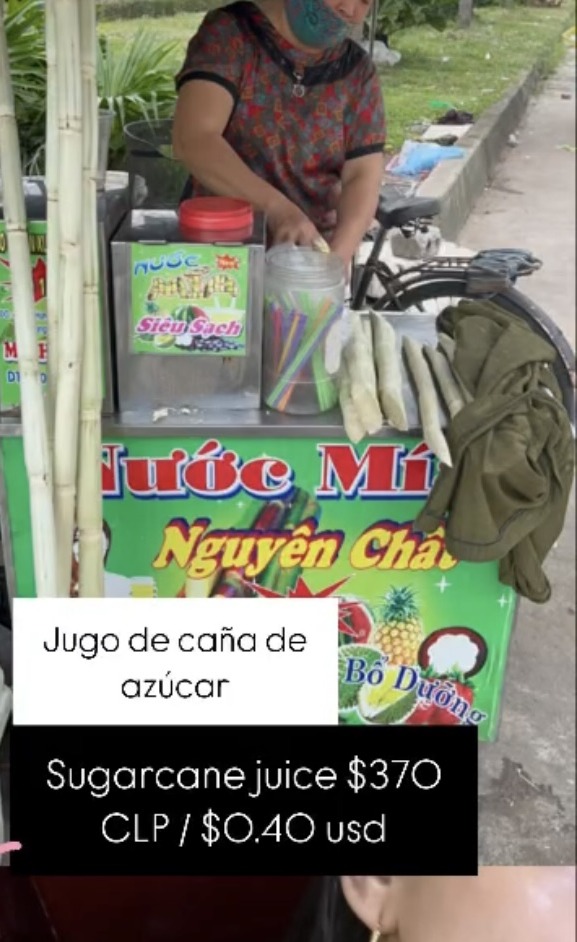
If you want exact prices in Chilean pesos for daily life in Vietnam, Bárbara has been posting them on her Instagram stories with side-by-side CLP/USD labels. Worth following her channel if you are in the early research phase.


She Is Back in Chile Now, and Vietnam Worked
Bárbara went back to Chile after a year. She traveled for a stretch including time in Bali, then settled back into life at home. Her next chapter is online tutoring (in English and Spanish) for the clients she has been building up, which is harder to do from Vietnam where time zones do not match Latin America well.
Vietnam was the year that gave her teaching experience, a real classroom track record, and the confidence that the version of her life away from engineering was workable. She told us she loved it.
The pattern across the teachers we place from Latin America: a stretch in Vietnam often becomes the bridge to the next thing, not the destination itself. For some teachers the next thing is staying longer. For others, like Bárbara, it is going home with a different version of themselves and a different career.


Frequently Asked Questions
Can a Chilean teach English in Vietnam without being a native speaker?+
Yes. Vietnam is one of the few countries in Asia that actively hires non-native English teachers, including from Chile and the rest of Latin America. The requirements are a bachelor's degree in any field (legalized in your home country), a TEFL certificate, and a C1 English level (the EFSET online test is free and accepted). Bárbara is a working example, plus we have placed teachers from Brazil, Colombia, Argentina, Ecuador, Peru, and Mexico over the past few years.
How much does an English teacher earn in Vietnam in Chilean pesos?+
The standard entry-level contract is 100 hours a month at $1,200 USD, which is roughly 1,115,000 CLP. Bárbara's contract was 80 hours at $1,100 USD (about 1,020,000 CLP). On contracts with included housing (common for placements outside HCMC and Hanoi), only utilities are paid out of pocket. The math is close to an entry-level engineering or office salary in Santiago, but with cost of living running at a fraction of Chilean prices.
How does a Chilean apply to teach English in Vietnam?+
The process Bárbara followed: 1) Confirm C1 English level (free EFSET test), 2) Complete an online TEFL certification (1-3 months), 3) Legalize your university degree at the Chilean Ministerio de Relaciones Exteriores (~$30), 4) Apply through an agency that places non-native teachers (UP2U is the one we operate, link in bio), 5) Send intro video and demo lesson video as part of agency screening, 6) Get matched with schools and interview, 7) Sign contract, fly out, legalize documents on arrival in Vietnam (~$460 USD).
What is the cost of living in Vietnam compared to Chile?+
For Chileans, Vietnam runs roughly 50-70% cheaper than Santiago across the categories that matter: rent, food, transport. Bárbara's vegetarian buffet in northern Vietnam cost 3,300 CLP. A sugarcane juice from a street vendor: 370 CLP. Rice flour at the supermarket: 700 CLP. Apartment rent for a teacher outside HCMC and Hanoi runs $200-500 USD a month, often included in agency placements.
Do I need to speak Vietnamese to teach in Vietnam?+
No. English is the language of instruction in your classes, and a Vietnamese teaching assistant handles classroom order and translation for younger students. Bárbara taught with no prior Vietnamese, picked up some basics in her first months, but never needed it for the job. For daily life, Google Translate plus the friendliness of Vietnamese people in everyday interactions covers the gap.
What is the typhoon season risk for new arrivals in northern Vietnam?+
Northern Vietnam (Hanoi and surrounding provinces) has typhoon season from August through October. Bárbara landed on the exact day a typhoon hit her placement city, and schools closed for several weeks. If you can choose your arrival timing, late October or November tends to be calmer. If not, plan for the possibility of low income in your first month and bring two to three months of living costs in cash savings.
Why did Bárbara go back to Chile after a year? Did Vietnam not work?+
Vietnam worked for her. She loved it. She left for personal reasons and to build an online tutoring business in English and Spanish that is easier to run from Latin American time zones, not because of any issue with the placement, the city, or the work. A year in Vietnam was the bridge to her next chapter, which is the pattern we see across a lot of Latin American teachers we place.
From Latin America and Wondering If This Is Real?
UP2U has placed teachers from Chile, Argentina, Colombia, Brazil, Mexico, Peru, and Ecuador in Vietnam. The quiz tells you what your specific situation looks like, with real numbers and real placement options.
No email required to start. Takes 2 minutes.